Summary
The Reluctant Star and Clarinet Virtuoso of the Swing Era
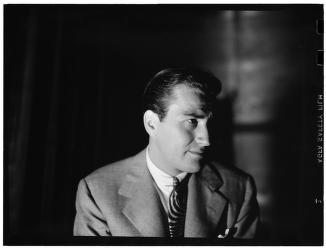
Artie Shaw (1910–2004) was one of the most technically gifted clarinetists and innovative bandleaders of the Swing Era—an artist whose brilliance was matched only by his ambivalence toward fame. Known for his pristine tone, daring arrangements, and intellectual approach to music, Shaw helped push big‑band jazz toward greater sophistication and emotional nuance.
Born Arthur Arshawsky in New York City and raised in Connecticut, Shaw began playing saxophone as a teenager but switched to clarinet, the instrument that would define his career. After early success as a studio musician, he burst onto the national scene in 1938 with his orchestra’s recording of “Begin the Beguine,” a Cole Porter tune that Shaw transformed into one of the era’s biggest hits. Almost overnight, he rivaled Benny Goodman as the country’s most prominent clarinetist.
Shaw’s bands were known for their lush string sections, adventurous harmonies, and impeccable ensemble precision. His arrangements blended swing with classical influences, most notably in pieces like “Frenesi,” “Stardust,” and “Summit Ridge Drive.” He also demonstrated a rare commitment to artistic integrity, frequently disbanding successful orchestras when he felt they had become musically stagnant.
Shaw’s collaborations were equally significant. He worked with groundbreaking vocalist Billie Holiday—one of the first major bandleaders to feature a Black singer in a white orchestra—and later helped launch the careers of singers such as Helen Forrest and Mel Tormé. His small group, the Gramercy Five, produced some of the most refined chamber‑jazz recordings of the 1940s.
Despite his fame, Shaw viewed celebrity with discomfort. He often withdrew from the spotlight, pursuing interests in writing, marksmanship, and intellectual study, ultimately stepping away from music entirely in the 1950s.