Summary
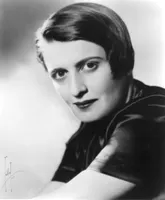
Before Ayn Rand formulated her system of thought or wrote her bestsellers, she endured the raw mechanics of a revolution that crushed her family, cornered her ambitions, and tried to replace her private judgment with public obedience. Explaining how her childhood under the revolution directly influenced her ideas helps readers see the personal roots of her philosophy.
1) Childhood under Revolution: From Promise to Confiscation
Ayn Rand (born Alisa Zinovyevna Rosenbaum) grew up in a milieu of urban middle-class enterprise in St. Petersburg. Her father owned a pharmacy—a modest but meaningful achievement that embodied the link between effort and reward. The Bolshevik Revolution shattered that link. When the new regime seized private property, expropriation wasn’t a theoretical debate; it was men with authority taking what one family had built. That moment—when her father’s business was nationalized—left an indelible mark. In the single act of confiscation, Rand saw a profound moral claim: that the individual could be sacrificed, without consent, to a political abstraction.
Rand’s early observations of propaganda, rationing, and the moral pageantry of “equality” taught her a hard lesson: when a system treats individual initiative as an acceptable casualty of social aims, human beings become instruments. The young Rand learned that a society organized around the collective can justify nearly any violation by invoking a higher purpose. This idea—moralized coercion—would animate her lifetime crusade against collectivism.
2) Intellectual Awakening: A Private Rebellion of the Mind
Even as a child, Rand was devouring literature and forming a fierce commitment to independent thought. She found in storytelling a way to frame human potential, and in History a pattern: the most incredible heights of achievement were reached by minds that dared to think alone. Beneath this, she intuited a principle she would later articulate: the mind is an individual’s basic tool of survival—and therefore cannot be subordinated to the state, the tribe, or any external command.
Her private rebellion was not loud. It was deliberate: cultivating a sense of personal sovereignty over her thoughts. Where public doctrine demanded conformity, she practiced intellectual self-ownership. That inner independence would become the seed of her later defense of reason, rights, and individual purpose.
3) Emigration to America: The Moral Meaning of Opportunity
Rand’s move to the United States was not merely geographical. It was philosophical. America symbolized voluntary exchange, merit, and a rough but absolute respect for individual initiative. If Soviet life dramatized the costs of coercion, American life dramatized the value of freedom. Los Angeles offered a strange but magnetic stage for her ambitions—Hollywood. Working as an extra, script reader, and eventually a screenwriter, she learned the disciplines of structure, dialogue, and dramatic conflict. She also witnessed firsthand the practical virtues she prized: ambition, innovation, and the marketplace as a testing ground for value.
Though she faced lean years and setbacks, the experience reinforced a conviction: freedom is not chaos. It is a framework of rights that allows individuals to try, fail, learn, and try again—without seeking permission from a collective. That framework is not merely economically efficient; it is morally just.
4) Early Works: Planting the Philosophical Flag through Story
Rand’s early plays and novels served as experiments for her emerging system. In “We the Living,” she depicted the harsh realities of Soviet life through a human story of aspiration under authoritarianism, thereby illustrating her core ideas about individual rights and freedom.
These were not mere plot devices—they were philosophical commitments dramatized in a way that readers could feel. Rand’s fiction would always remain the engine of her ideas because it provided the emotional experience of confronting heroism and conformity, choice and coercion, truth and evasion.
5) The Turning Point: From Critic to Architect
Many writers criticize the world; Rand set out to build a philosophy. By the time she conceived “The Fountainhead”, she aimed not just to condemn collectivism but to define a positive, integrated view of man and society. Her hero, architect Howard Roark, embodied independence not as eccentricity but as moral necessity: to think for oneself and to act on one’s rational judgment without apology. Through Roark, Rand dramatized this thesis: the creator lives for his work, not for the crowd.
This shift—from negation to construction—marked her evolution from anti-collectivist novelist to a philosopher building a comprehensive system. Her life experiences, especially her move to America and her work on “The Fountainhead,” directly contributed to her core Objectivist concepts, clarifying her philosophical development.
6) The Personal Cost: Controversy, Community, and Discipline
Rand’s life in letters was not peaceful. She attracted both fierce loyalty and severe criticism. But beyond public controversies lies a revealing fact: her daily discipline was rigorous. She treated intellectual life as a craft—outlining, revising, debating. This discipline, rooted in her personal sacrifices and unwavering commitment, exemplifies her dedication to living her philosophy and helps readers understand her moral consistency.
7) Why This Origin Story Matters
To read Rand solely as a polemicist is to miss the living wound that animated her principles. She was not speculating about the dangers of collectivism; she had seen them. Nor was she merely praising capitalism as a productive system; she defended it as a moral system that respects the dignity of the individual mind.
Quote:
“I will not live for the sake of another man, nor ask another man to live for mine.”
(Note: Paraphrased concept central to Rand’s ethic.)
8) Teaching and Discussion Prompts
- How does lived experience shape a philosopher’s conclusions?
- Is confiscation of property merely economic harm, or a moral one?
- What does America represent in Rand’s moral universe—and where does it fall short?
- Can fiction communicate philosophical truths more effectively than essays?
9) Takeaway
Ayn Rand’s biography isn’t a footnote to her philosophy—it is its ignition point. From her father’s expropriated pharmacy to her hard-won place in American letters, she forged a moral thesis: the individual is sovereign, and any system that subordinates the mind to the collective commits an original sin against human life.