Summary
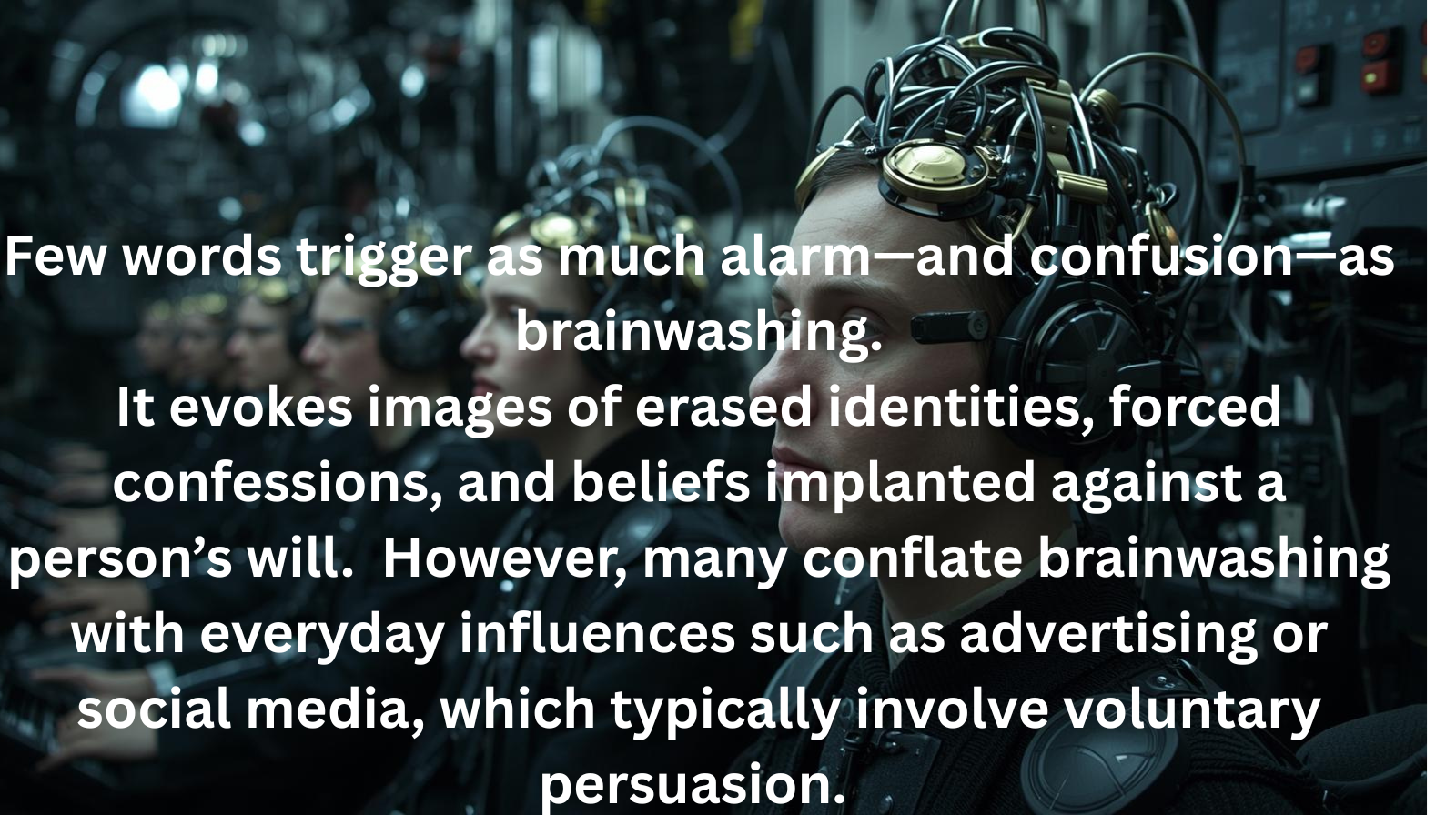
Few words trigger as much alarm—and confusion—as brainwashing. It evokes images of erased identities, forced confessions, and beliefs implanted against a person’s will. However, many conflate brainwashing with everyday influences such as advertising or social media, which typically involve voluntary persuasion. Clarifying this difference helps readers understand why the term carries such weight and how influence can be ethical and non-coercive. So what does brainwashing actually describe—and why does the idea still haunt modern culture?
What Brainwashing Really Means
In its strictest and most serious sense, brainwashing—also known as mind control or coercive persuasion—is a systematic effort to force an individual to abandon existing beliefs and adopt a new ideology.
Unlike persuasion, which relies on argument, emotion, or appeal, brainwashing operates through coercion. The goal is not to convince someone. It is to break down resistance until compliance feels like relief.
“Brainwashing isn’t about changing minds. It’s about breaking them first.”
Understanding the distinction among influence, persuasion, and coercion is crucial because it helps audiences feel confident in their ability to recognize genuine manipulation, which is essential for maintaining their autonomy.
Three Core Meanings of the Term
Over time, brainwashing has come to be used in three distinct ways—only one of which reflects its original meaning.
1. Forced Indoctrination
At its most literal, brainwashing refers to deliberate, sustained efforts to dismantle an individual’s psychological defenses. This may involve prolonged stress, physical deprivation, or manipulative conditioning designed to make resistance unsustainable.
2. Systematic Repetition
A defining feature is relentless repetition paired with information blockade. A single narrative is reinforced continuously, while alternative perspectives are restricted, discredited, or punished.
“Control the information, and belief becomes a byproduct.”
3. Colloquial Usage
In everyday speech, the term is often used metaphorically—to describe heavy advertising, partisan media, or cultural conformity. In these cases, brainwashing signals perceived influence rather than actual coercion.
The Conditions That Make Brainwashing Possible
True brainwashing does not occur casually. It requires specific, controlled conditions, most of which are difficult to sustain outside extreme environments.
Isolation
Subjects are separated from family, friends, and familiar social feedback. Isolation weakens identity by removing reinforcement of prior beliefs.
Physical Stress
Sleep deprivation, hunger, exhaustion, or discomfort reduces cognitive resilience and critical thinking capacity.
Psychological Pressure
Public humiliation, threats, forced confessions, or unpredictable punishment destabilize emotional equilibrium and increase dependency on authority.
Information Control
Exposure is limited to a single worldview. Contradictory ideas are framed as dangerous, immoral, or evidence of personal failure.
“Brainwashing works not by persuasion, but by exhaustion.”
Where the Term Came From
Despite its timeless feel, brainwashing is a modern invention.
The term is a literal translation of the Chinese phrase xǐ nǎo (洗腦), meaning ‘wash brain,’ and entered English in [year] through Edward Hunter, a journalist and CIA operative, during the early Cold War years.
The term gained prominence during the Korean War, when some American prisoners of war appeared to cooperate with—or publicly support—their Chinese captors.
Brainwashing became a way to explain the unthinkable: ideological compliance under extreme pressure.
The Korean War Debate
Those POW cases sparked a controversy that has never been fully settled.
Some researchers argued that harsh captivity conditions—fear, starvation, isolation, and uncertainty—were sufficient to explain compliance, without invoking a unique mind‑control process. Others believed structured psychological techniques played a decisive role.
The debate revealed something deeper: brainwashing functioned not only as a psychological concept, but as a political explanation, shaped by Cold War anxieties about ideology and loyalty.
Brainwashing vs. Persuasion
Much of the confusion surrounding the term stems from a failure to distinguish coercion from influence.
Persuasion
- Allows choice
- Permits access to competing ideas
- Can be accepted or rejected
Brainwashing
- Eliminates alternatives
- Punishes dissent
- Relies on coercion rather than consent
“Persuasion invites agreement. Brainwashing removes the option to disagree.”
This difference is not just semantic; it has ethical significance. Recognizing whether influence is voluntary or coercive affects how we judge actions and messages, emphasizing the importance of consent and autonomy in social interactions.
How the Term Is Used Today
Although true brainwashing, systematic, coercive thought reform, is rare today, the idea persists because it taps into fears about loss of autonomy. Understanding its rarity helps readers distinguish between sensationalism and genuine psychological manipulation, fostering a more nuanced view of influence in modern society.
Cults
Leaders are often accused of using isolation, identity reshaping, and psychological pressure to recruit and retain members.
Politics
The term is used—sometimes accurately, often rhetorically—to describe propaganda campaigns in both authoritarian and democratic systems.
Corporate Culture and Branding
Consumers jokingly describe themselves as “brainwashed” by brands or trends. In these cases, the term signals habit or enthusiasm, not coercion.
When the word is applied everywhere, its meaning weakens.
Why the Idea Endures
Brainwashing persists as a cultural fear because it speaks to something fundamental: the anxiety that autonomy can be taken without consent.
In mass societies shaped by media, institutions, and algorithms, people worry not just about what they believe—but why they believe it.
“The danger isn’t that brainwashing is everywhere. It’s that we stop distinguishing influence from force.”
Overuse of the term dulls our ability to recognize genuine abuse when it occurs.
The Bottom Line
True brainwashing, involving systematic coercive thought reform, is rare and requires specific conditions most people will never encounter, reassuring readers about their own safety.
Recognizing the boundary between influence and domination is vital because it empowers audiences to make informed choices and feel in control of their beliefs and decisions.
Understanding that boundary matters—not only for historical accuracy, but for how we talk about power, persuasion, and responsibility today.