Summary
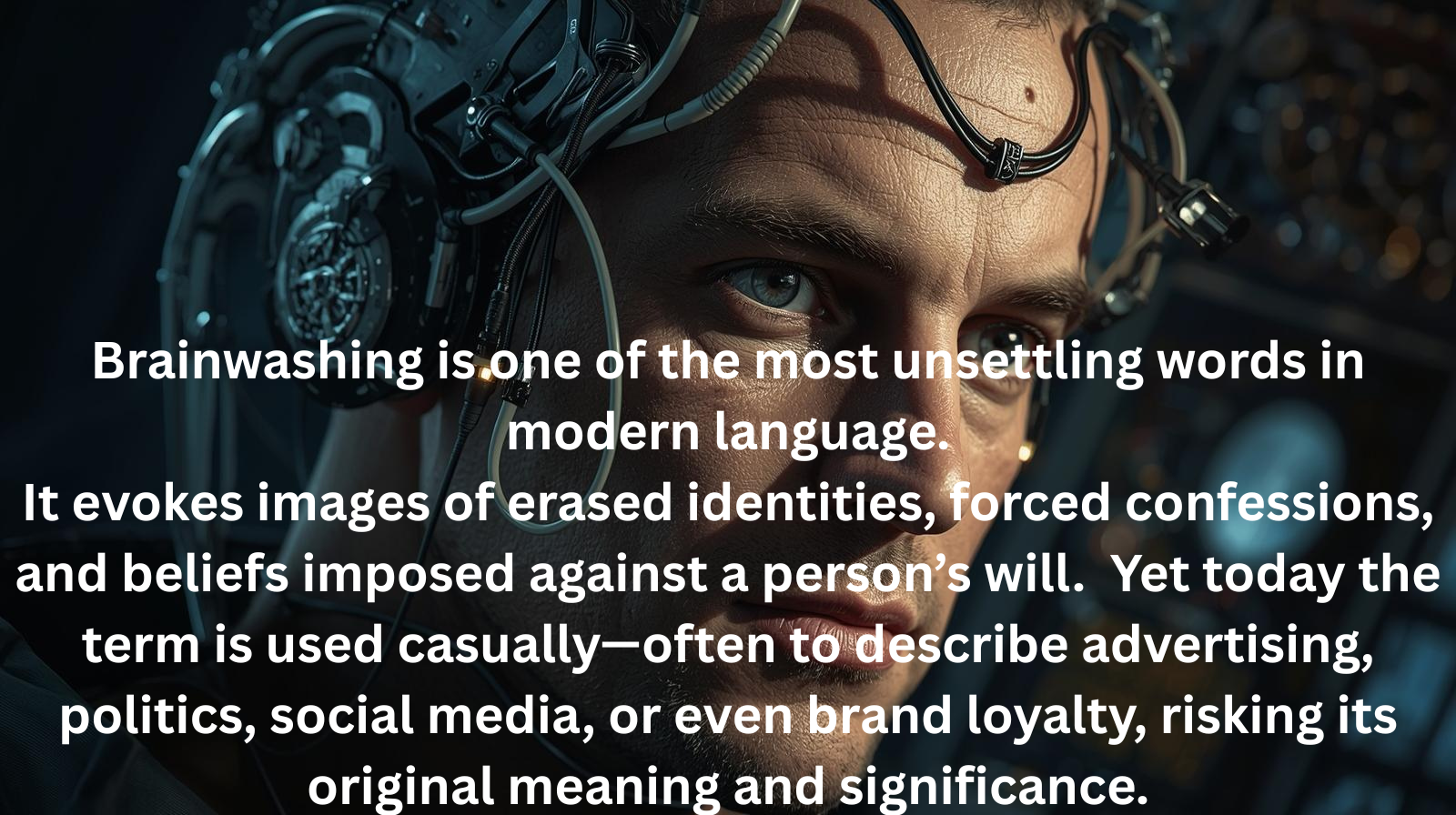
Brainwashing is one of the most unsettling words in modern language. It evokes images of erased identities, forced confessions, and beliefs imposed against a person’s will. Yet today the term is used casually—often to describe advertising, politics, social media, or even brand loyalty, risking its original meaning and significance.
So what does brainwashing actually describe—and why does the idea still resonate?
What Brainwashing Means
In its strictest sense, brainwashing—also known as mind control or coercive persuasion—is a systematic effort to force an individual to abandon existing beliefs and adopt a new ideology.
It relies on coercion rather than persuasion, which can make the audience wary of subtle influences that erode resistance.
Brainwashing isn’t about changing minds. It’s about breaking them first.
This distinction helps the audience recognize when influence crosses into coercion, encouraging critical awareness of social pressures.
How Brainwashing Works
True brainwashing does not occur casually. It requires specific, controlled conditions designed to weaken resistance and narrow perception.
Isolation cuts individuals off from family, friends, and familiar social cues, destabilizing identity.
Physical stress—such as sleep deprivation, hunger, exhaustion, or intense physical discomfort—reduces the ability to think critically and resist influence.
Psychological pressure, including humiliation or threats, erodes emotional stability.
Information control ensures exposure to only one worldview, while alternatives are framed as dangerous or immoral.
Control the information, and belief becomes a byproduct.
These elements work together, not to persuade, but to exhaust.
Where the Term Came From
Despite its timeless feel, brainwashing is a modern invention.
The word is a literal translation of the Chinese phrase xǐ nǎo (洗腦), meaning “wash brain.” It entered English in 1950, during the early Cold War, and gained prominence during the Korean War. At the time, it was used to explain why some American prisoners of war appeared to cooperate with—or publicly support—their captors.
Brainwashing became a way to explain ideological compliance under extreme pressure.
Scholars later debated whether these cases reflected a unique mind‑control process or simply the effects of harsh captivity. The controversy endures.
Brainwashing vs. Persuasion
Much of the confusion surrounding the term stems from a failure to distinguish influence from force.
Persuasion allows choice, permits access to competing ideas, and can be accepted or rejected.
Brainwashing eliminates alternatives, punishes dissent, and relies on coercion rather than consent.
Persuasion invites agreement. Brainwashing removes the option to disagree.
This difference is not just about semantics; it is about ethics, as persuasion respects choice while brainwashing violates autonomy and consent.
How the Term Is Used Today
Today, brainwashing is applied far beyond its original meaning.
It appears in discussions of cults, where leaders are accused of isolating members and reshaping identity. It is used rhetorically in politics to describe propaganda or ideological conformity. It even appears humorously in consumer culture, where people claim to be “brainwashed” by brands.
When the word is applied everywhere, its meaning weakens.
Overuse blurs the line between influence and abuse.
Why the Idea Persists
The concept of brainwashing endures because it names a deep anxiety: the fear that autonomy can be taken without consent.
In societies shaped by mass media, institutions, and constant messaging, people worry not just about what they believe, but why they believe it.
The danger isn’t that brainwashing is everywhere. It’s that we stop distinguishing influence from force.
The Bottom Line
Real brainwashing—systematic, coercive thought reform—is rare and extreme, which can help the audience feel reassured about their everyday experiences.
But the word persists because it marks a vital boundary: between persuasion and domination, belief and compliance, choice and coercion. Preserving that distinction matters—not only for accuracy, but for understanding freedom itself.