Summary
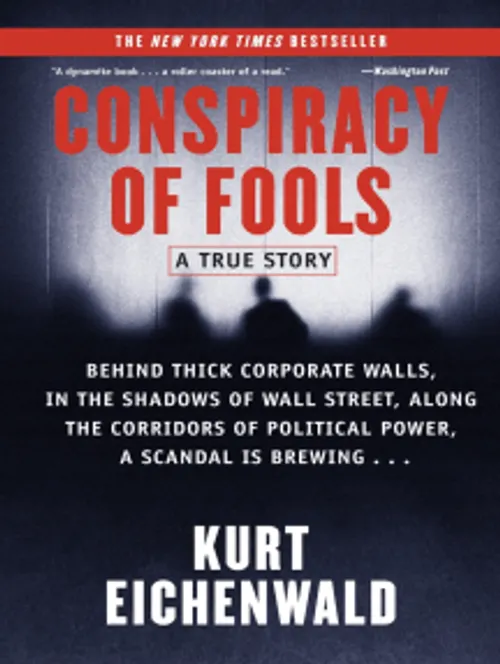
Conspiracy of Fools (published in 2005) is a deeply researched nonfiction account of the infamous Enron scandal, one of the largest corporate collapses in U.S. History. Written by investigative journalist Kurt Eichenwald, the book reads like a financial thriller while remaining grounded in fact.
Core Theme
The book explores how greed, deception, and systemic failures led to Enron’s implosion in late 2001. Once celebrated as “America’s Most Innovative Company,” Enron was revealed to have engaged in massive accounting fraud, hiding billions in debt and inflating profits through complex financial structures.
Key Focus Areas
- Rise and fall of Enron: From its beginnings as a natural gas pipeline company to its transformation into an energy trading powerhouse.
- Corporate Culture: A toxic environment that rewarded aggressive growth and punished transparency, enabling unethical practices.
- Accounting Manipulation: CFO Andrew Fastow created off-balance-sheet entities to conceal losses, while auditors and lawyers looked the other way.
- Major Players:
- Ken Lay’s mismanagement and Jeff Skilling’s risky strategies show how leadership decisions can have far-reaching consequences, urging the audience to consider ethical responsibility.
- Jeff Skilling (President): Architect of Enron’s risky strategies.
- Andrew Fastow (CFO): Mastermind behind fraudulent financial schemes.
- Michael Kopper: Fastow’s partner in crime.
- Complicity: Enron’s board, auditors (Arthur Andersen), and even regulators failed to intervene.
- Impact: The Collapse wiped out $60 billion in market value, destroyed 29,000 jobs, and erased life savings for thousands of employees and investors.
Style and Scope
Eichenwald combines investigative detail with narrative drama, illustrating how the Enron scandal exposed critical flaws in modern corporate governance. This theme remains relevant today, helping readers grasp its lasting Impact.
Chapter-by-chapter style summary of Conspiracy of Fools:
Part I: The Rise of Enron
- Early Ambitions: The book opens with Enron’s transformation from a pipeline company into an energy trading giant. Ken Lay’s vision and Jeff Skilling’s innovative “asset-light” strategy set the stage for rapid growth.
- Culture of Aggression: Enron’s internal culture rewards risk-taking and punishes caution, creating an environment ripe for ethical lapses.
Part II: Financial Engineering
- Mark-to-Market Accounting: Skilling introduces accounting practices that allow Enron to book projected profits immediately, even if cash never materializes.
- Fastow’s Schemes: CFO Andrew Fastow designs off-balance-sheet entities (SPEs) to hide debt and inflate earnings, with the board’s approval.
- Arthur Andersen’s Role: The auditing firm signs off on questionable practices, prioritizing fees over integrity.
Part III: The House of Cards
- Stock Price Obsession: Executives focus on maintaining Enron’s soaring stock price, using complex financial maneuvers to mask losses.
- Internal Warnings Ignored: Whistleblowers and cautious voices are sidelined as leadership doubles down on risky strategies.
- Political Connections: Enron leverages lobbying and political influence to maintain its image and regulatory advantages.
Part IV: The Collapse
- Liquidity Crisis: When confidence erodes, Enron faces a cash crunch. Credit rating downgrades trigger panic.
- Fastow Exposed: Investigations reveal Fastow’s self-dealing and fraudulent partnerships.
- Bankruptcy: Enron files for Chapter 11 in December 2001, wiping out billions in shareholder value and employee pensions.
Part V: Fallout and Lessons
- Legal Consequences: Executives face criminal charges; Arthur Andersen collapses.
- Systemic Failures in corporate governance and oversight reveal how neglect and malfeasance can devastate many, encouraging the audience to reflect on accountability.
- By framing Enron as a cautionary tale about unchecked ambition and financial opacity, the audience is encouraged to value transparency and remain vigilant against similar risks.
Key events and character actions:
Part I: The Rise of Enron
- Ken Lay’s Vision: Lay merges Houston Natural Gas and InterNorth to form Enron, aiming to dominate energy markets.
- Jeff Skilling’s Arrival: Skilling introduces the idea of an energy trading platform and “asset-light” strategy, shifting Enron from pipelines to financial markets.
- Cultural Shift: Enron adopts a hyper-competitive, rank-and-yank system that rewards aggressive risk-taking and punishes caution.
- Early Success: Enron becomes a Wall Street darling, with soaring stock prices and praise for innovation.
Part II: The Financial Engineering
- Mark-to-Market Accounting: Skilling pushes for accounting that books projected profits immediately, creating inflated earnings.
- Fastow’s Special Purpose Entities (SPEs): CFO Andrew Fastow designs partnerships (LJM, Raptors) to hide debt and manipulate earnings.
- Board Approval: Enron’s board signs off on Fastow’s dual role as CFO and SPE Manager, ignoring conflicts of interest.
- Arthur Andersen’s Complicity: The auditing firm approves questionable practices, prioritizing lucrative consulting fees.
Part III: The House of Cards
- Stock Price Obsession: Executives focus on maintaining Enron’s high valuation, using increasingly complex financial maneuvers.
- Whistleblower Ignored: Sherron Watkins warns Lay about accounting irregularities, but leadership downplays concerns.
- Political Influence: Enron leverages lobbying and ties to Washington to maintain its image and regulatory advantages.
- Global Expansion: Risky ventures in broadband and international markets fail, deepening financial strain.
Part IV: The Collapse
- Liquidity Crisis: Credit rating agencies downgrade Enron, triggering margin calls and panic among investors.
- Fastow’s Exposure: Investigations reveal Fastow’s self-dealing and fraudulent partnerships, eroding trust.
- Skilling Resigns: Skilling abruptly steps down as CEO, citing personal reasons, leaving Lay to manage the crisis.
- Bankruptcy Filing: Enron declares Chapter 11 in December 2001, wiping out $60 billion in market value and employee pensions.
Part V: Fallout and Lessons
- Legal Consequences: Fastow, Skilling, and Lay face criminal charges; Arthur Andersen collapses after an obstruction of justice conviction.
- Systemic Failures: The scandal exposes weaknesses in corporate governance, auditing standards, and regulatory oversight.
- Broader Impact: Enron became a symbol of corporate greed and the dangers of opaque financial practices, prompting reforms such as the Sarbanes-Oxley Act, which aimed to prevent similar scandals and helped readers understand regulatory responses.
The Enron saga, as covered in Conspiracy of Fools:
1985–1990: Formation and Early Growth
- 1985: Houston Natural Gas merges with InterNorth to form Enron under Ken Lay.
- Late 1980s: Enron begins deregulated energy trading, laying the foundation for its future business model.
1990–1996: Innovation and Aggressive Expansion
- 1990: Jeff Skilling joins Enron, introducing the “asset-light” strategy and energy trading platform.
- 1992: Enron adopts mark-to-market accounting, allowing it to book projected profits immediately.
- Mid-1990s: Enron becomes a Wall Street favorite, and its stock price surges.
1997–1999: Financial Engineering and Risk
- 1997: Andrew Fastow becomes CFO, creating Special Purpose Entities (SPEs) like LJM partnerships to hide debt.
- 1999: Enron ventures into broadband and international markets—both fail, increasing financial strain.
2000: Peak and Cracks
- Early 2000s: Enron’s stock hits an all-time high; executives cash out millions.
- Late 2000: Internal warnings emerge about accounting irregularities; leadership ignores them.
2001: Collapse
- August 2001: Jeff Skilling abruptly resigns as CEO; Ken Lay returns.
- October 2001: Sherron Watkins sends a memo warning of accounting fraud.
- November 2001: Credit rating agencies downgrade Enron; liquidity crisis deepens.
- 2 December 2001: Enron files for Chapter 11 bankruptcy, erasing $60 billion in market value.
2002–2004: Fallout
- 2002: Investigations reveal Fastow’s self-dealing; Arthur Andersen convicted of obstruction of justice.
- 2004: Fastow pleads guilty; Skilling and Lay are indicted.
Closing
The Enron scandal, as chronicled in Conspiracy of Fools, stands as a stark reminder of how ambition, arrogance, and systemic failure can converge to create catastrophic consequences. It was not the work of a single villain but a web of complicity—executives, auditors, regulators, and even investors—all blinded by the illusion of endless growth. The collapse destroyed billions in wealth, shattered lives, and eroded trust in corporate America, ultimately prompting sweeping reforms like the Sarbanes-Oxley Act. Yet, its lessons remain timeless: transparency, accountability, and ethical leadership are not optional; they are the bedrock of sustainable enterprise.