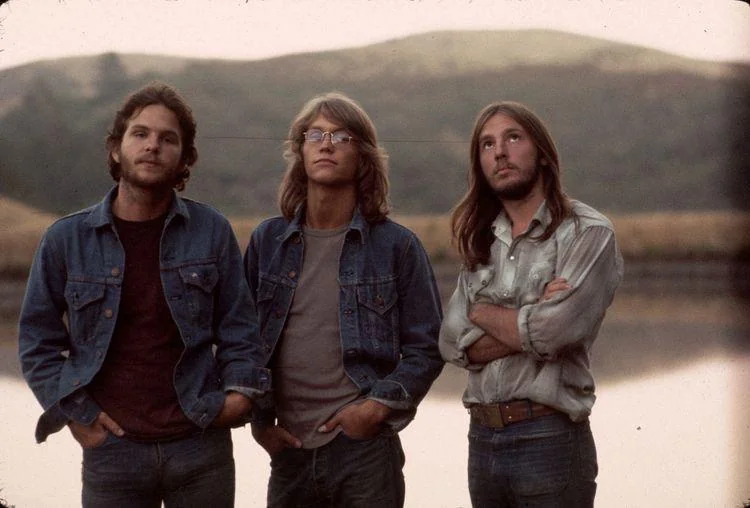
There was a time when a band could make a quiet song without anesthetizing the listener. America’s “Daisy Jane,” released in 1975 on the Hearts album, is one of those records.
Videos:
https://www.youtube.com/watch?app=desktop&v=MmF945d06sI
https://www.youtube.com/watch?v=AoMCoVbQm3Y
https://www.youtube.com/watch?v=2JYuuk4L2Vc
https://www.youtube.com/watch?v=um3iw1QHAzA
https://www.youtube.com/watch?v=VJt98rm4WQU
It followed “Sister Golden Hair,” the band’s No. 1 hit, and still managed to reach No. 20 on the Billboard Hot 100 and No. 4 on the Adult Contemporary chart—which tells you that in 1975, the public still had enough taste left to reward melody, restraint, and craftsmanship.
This is not a bombastic song. It does not pound on the table. It does not beg for attention like half the overproduced junk that came later. It just walks into the room, sits down, and quietly proves it belongs there.
Gerry Beckley wrote it, sang it, and built it around a simple emotional premise: a man heading back to Memphis, trying to find the woman he left behind. Beckley later said there was no real Daisy Jane and that he had never even been to Memphis, which is almost the point. The song works because it captures emotional truth, not because it was pulled from some sacred diary entry.
That is where America had an edge that people often miss. They were filed under “soft rock,” which is fine as far as it goes, but that label is too often mistaken for weakness. “Daisy Jane” is soft in tone, not soft in execution—big difference. The melody is clean. The harmonies are disciplined. The arrangement knows exactly what to do and, more importantly, what not to do. This craftsmanship commands respect and admiration from listeners who value quality music.
And then there is the George Martin factor. Yes, that George Martin. He produced Hearts, played piano on “Daisy Jane,” and helped shape the track with strings and a solo cello that adds elegance without drowning the song in syrup. This professional restraint—trusting the song’s strength without overdoing it-creates a sense of confidence in the music’s integrity. America was smart enough to let him, and that Trust still resonates today.
Even the opening has character. Songfacts notes the subtle “heartbeat” effect at the start, and Beckley explained that part of that sound came from the piano pedal mechanism during recording. That little accidental detail says more about real studio craft than a hundred digital plug-ins and a committee of producers trying to engineer authenticity after the fact. Sometimes the magic is not in the polish. Sometimes it is in leaving the imperfection alone because it gives the record a pulse.
Commercially, “Daisy Jane” mattered more than people remember. It was the second single from Hearts, an album that reached No. 4 on the Billboard album chart, and the song became the final Top 20 hit by America’s original three-member lineup—Gerry Beckley, Dewey Bunnell, and Dan Peek. In other words, this was not some neglected deep cut for vinyl snobs to rediscover over bourbon and nostalgia. It was a real hit, from a real peak period, at the tail end of the band’s first major run.
What holds up now is the discipline. “Daisy Jane” does not oversell. It does not scream, “Please notice how emotional I am.” It does not lunge into cheap drama. It is wistful, yes. Tender, yes. But it is also controlled, intentional, and built by people who knew the difference between feeling something and performing emotional bankruptcy for applause. That distinction used to matter. In good music, it still does.
So if you want the short version, here it is: “Daisy Jane” is soft rock for people who still respect craftsmanship. It is graceful without being flimsy, emotional without being syrupy, and polished without being plastic. America did not try to bulldoze the listener here. They did something harder. They trusted the song. And that Trust is exactly why it still works fifty years later.