Videos
https://www.youtube.com/watch?v=CdvITn5cAVc
David Bowie & Mick Jagger
https://www.youtube.com/watch?v=opRRax4ph3E
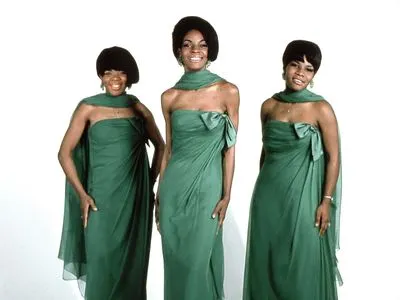
When Martha Reeves and the Vandellas released “Dancing in the Street” in the summer of 1964, it arrived at a uniquely volatile moment in American History. The Civil Rights Act of 1964 had just been signed, the Freedom Summer campaign was underway in Mississippi, and racial unrest was spreading through major U.S. cities. Against this backdrop, what was intended as an exuberant dance record quickly took on meanings far beyond its creators’ original intentions.
An “Accidental” Civil Rights Anthem
The song’s writers—Marvin Gaye, William “Mickey” Stevenson, and Ivy Jo Hunter—have consistently described it as a celebration of unity and shared public joy, inspired by scenes of racially mixed children dancing around open fire hydrants in Detroit neighborhoods. Yet listeners in 1964 heard something else.
As protests, voter‑registration drives, and urban demonstrations intensified, the song’s repeated imagery of people gathering in public spaces resonated powerfully. Many young Americans—particularly African Americans—interpreted it as a call to collective presence and visibility in streets that had historically been contested and policed spaces.
Music historian Mark Kurlansky later described the phenomenon as a case where context transformed intention, arguing that the song “became political because the moment demanded it,” not because it was written as a manifesto.
Public Space as Political Space
One reason the song aligned so naturally with the civil rights movement is its focus on the street itself. During the 1960s, streets were the primary arenas of protest—sites of marches, sit-ins, clashes, and community mobilization. To gather publicly, even joyfully, carried political significance.
Cultural critics have noted that dancing in public space—particularly for Black Americans—was an assertion of dignity and belonging in cities structured by segregation and inequality. In that sense, the song’s insistence on shared participation, regardless of status or background, echoed the movement’s demand for equal access to civic life.
The Artist’s Perspective
Importantly, Martha Reeves herself repeatedly rejected the idea that the song was intended as a protest. In interviews, she emphasized that it was meant to be a joyful, inclusive party record and expressed discomfort with its association with riots or violence.
This tension—between artist intent and public interpretation—has become central to the song’s legacy. Reeves’s insistence on joy does not negate the song’s political Impact; rather, it underscores how cultural meaning is often shaped by audiences living through historic upheaval.
Enduring Symbolism
By the late 1960s, “Dancing in the Street” was firmly embedded in the cultural memory of the civil rights era. It was played at rallies, referenced in activist publications, and later analyzed as a soundtrack to a summer defined by both hope and unrest. Its inclusion in the Library of Congress National Recording Registry further cemented its status as a historically significant work that “made people dance and, perhaps, think”.
Ultimately, the song’s civil‑rights connection lies not in explicit political messaging but in its ability to translate collective emotion into sound. It captured a moment when joy, defiance, fear, and aspiration converged in public spaces—and when simply being present together could be an act of quiet resistance.
Cultural Power & Legacy
“Dancing in the Street” reminds us that cultural change does not always arrive with raised fists or raised voices. Sometimes it comes on a beat that makes people move together before they realize they are standing side by side. The song’s civil‑rights legacy lies not in what it demanded, but in what it normalized: visibility, unity, and joy in public space. That is why it remains less a relic of the 1960s than a recurring reminder of how music can quietly reshape the meaning of freedom.