Introduction: Why This Expression Still Resonates
Ever heard someone say, “He’s dragging his feet”? Instantly, you picture hesitation, delay, or resistance. But where did this colorful phrase come from, and why does it still hold power in everyday language?
The Meaning Behind the Words
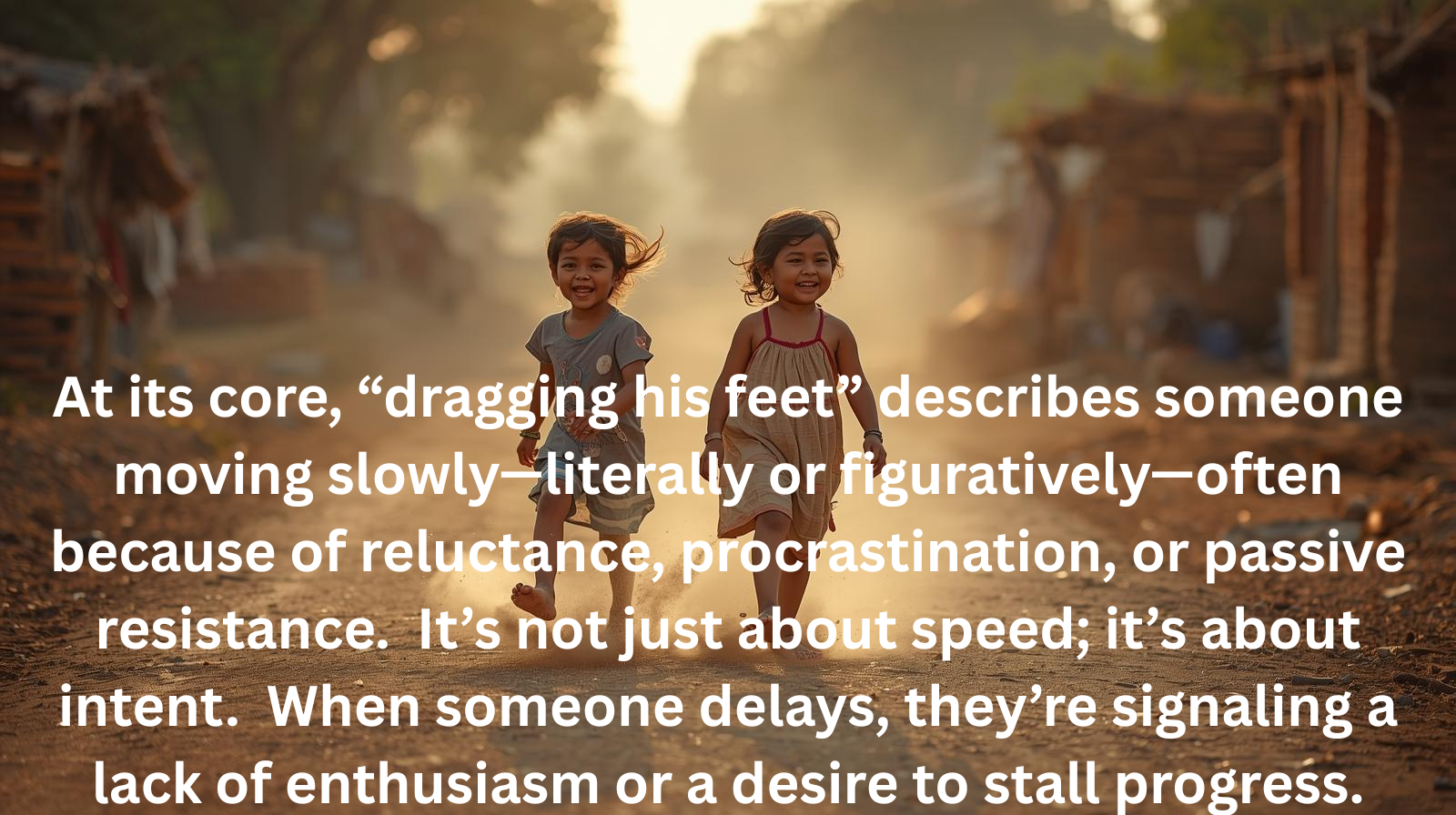
At its core, “dragging his feet” describes someone moving slowly—literally or figuratively—often because of reluctance, procrastination, or passive resistance. It’s not just about speed; it’s about intent. When someone delays, they’re signaling a lack of enthusiasm or a desire to stall progress.
The phrase likely originated in the 18th or 19th century and is associated with military imagery, which helps the audience feel intrigued by its historical connection to resistance and delay.
The phrase likely originated in the 18th or 19th century and is tied to military imagery. Some believe it stems from soldiers literally dragging their feet due to exhaustion or reluctance, but others suggest it may also relate to older expressions of sluggishness. Clarifying these theories helps readers appreciate the phrase’s complex origins and its evolution into a metaphor for resistance.
By the early 1900s, the expression appeared in American newspapers and literature, often used to describe bureaucratic delays or political stalling. It has become a shorthand for inefficiency—a term that resonates even more today.
Cultural evolution is driven by the phrase’s ability to describe universal human behaviors. Explaining its significance in various contexts helps readers recognize its relevance across settings, from corporate negotiations to personal relationships, thereby enhancing their understanding of its ongoing importance.
Language evolves, but some idioms stick because they capture universal human behavior. Dragging one’s feet is timeless because hesitation and resistance are timeless. Whether in corporate negotiations, government policy, or personal relationships, the phrase vividly conveys a sense of inertia.
Today, phrases like ‘beating around the bush’ or ‘cutting corners’ are used alongside ‘dragging his feet’ to describe delays or avoidance in various situations, illustrating how idioms continue to shape our language and perceptions.
Today, you’ll find the phrase everywhere:
- Business: “The committee is dragging its feet on approving the budget.”
- Politics: “Lawmakers are dragging their feet on climate legislation.”
- Personal Life: “He’s dragging his feet about committing to the project.”
Its versatility makes it a favorite for journalists, executives, and everyday speakers.
Psychology Behind Foot-Dragging
Why do people drag their feet—literally or figuratively? Often, it’s about fear of change, lack of motivation, or strategic delay, which can help the audience feel more empathetic toward such behavior and see it as a common human experience.
Quotable Insight
“Dragging your feet isn’t just about slowing down—it’s about sending a message without saying a word.”
Conclusion: A Phrase That Marches On
From muddy battlefields to modern boardrooms, “dragging his feet” remains a vivid metaphor for resistance and delay. It’s a reminder that language often mirrors life—and that sometimes, the slowest steps speak the loudest.