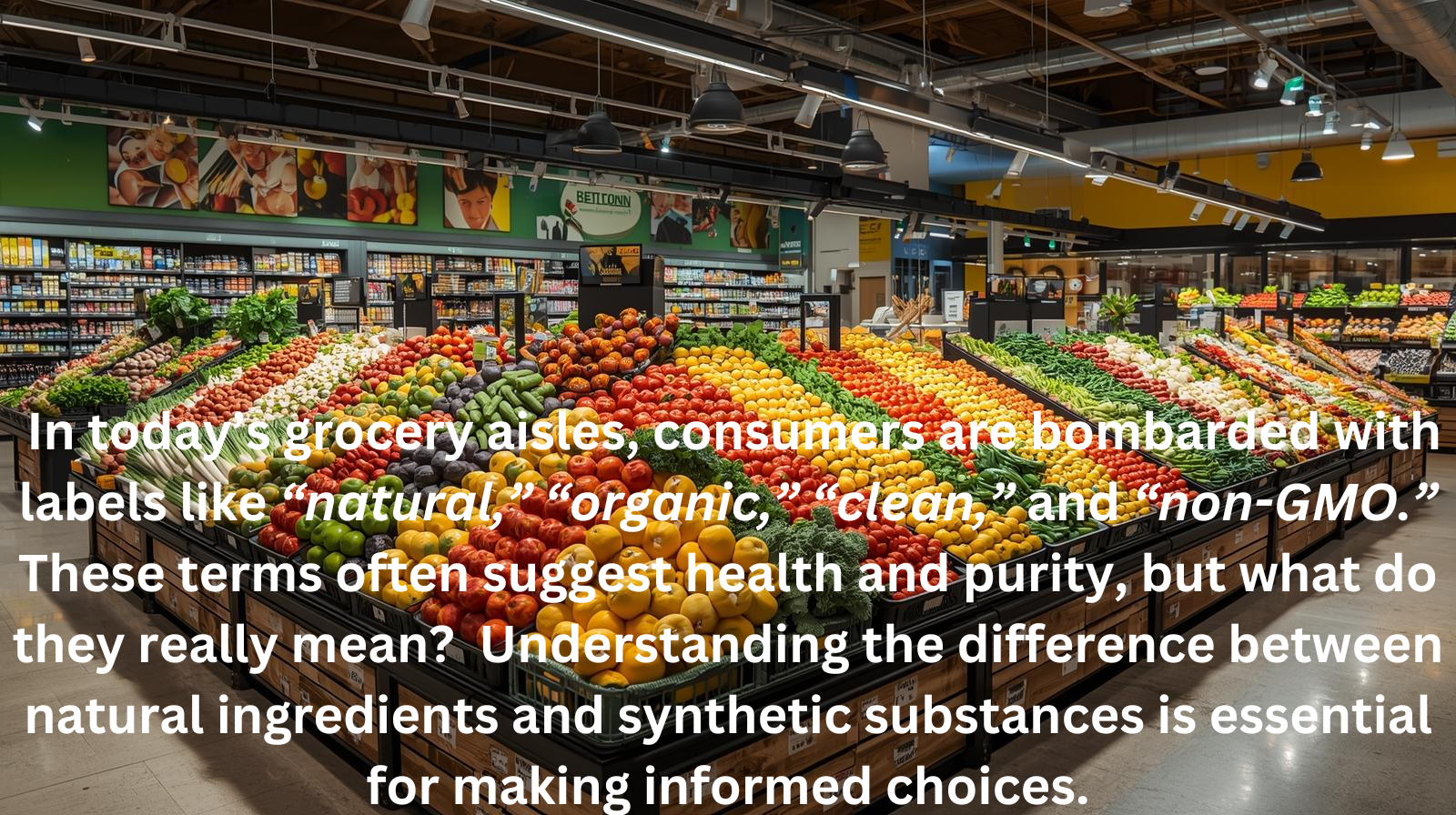
What Are Natural Ingredients?
Natural ingredients are derived from plants, animals, or minerals with minimal processing.
They include:
- Preservatives: Salt, sugar, vinegar.
- Colorants: Beet juice, turmeric, spirulina.
- Flavor enhancers: Herbs, vanilla extract.
- Antioxidants: Vitamin C, rosemary extract.
These substances are often perceived as safer and more wholesome because they come from familiar sources and may provide additional nutrients or antioxidants.
What Are Synthetic Additives?
Synthetic additives are lab-made compounds designed to mimic or enhance natural properties.
Common examples include:
- Preservatives: Sodium benzoate, BHA, BHT.
- Colorants: FD&C Red No. 40, Yellow No. 5.
- Flavor enhancers: MSG, aspartame.
- Stabilizers: Polysorbates, xanthan gum.
While these additives improve shelf life and consistency, they often raise concerns about allergies, hyperactivity in children, and long-term health effects.
FDA Guidelines on Labeling
The FDA does not have a formal definition for “natural,” but its policy states that foods labeled as natural should contain no artificial colors, flavors, or synthetic substances. However, this does not cover production methods or guarantee nutritional benefits.
By contrast, organic labeling is strictly regulated by the USDA.
Products with the USDA Organic seal must:
- Contain at least 95% organic ingredients.
- Be produced without synthetic pesticides, fertilizers, GMOs, or irradiation.
Examples of Foods with Natural Ingredients
- Organic Peanut Butter: Made with peanuts and salt, without hydrogenated oils or artificial stabilizers.
- Fruit Snacks with Beet Juice or Carrot Powder: Instead of synthetic dyes like Red 40.
- Organic Frozen Meals (Amy’s Kitchen): Certified organic, using natural seasonings and vegetables.
- Whole Grain Cereals (Bob’s Red Mill): Minimal processing, no artificial colors or flavors.
How to Spot Natural vs. Synthetic on Labels
· Check the Ingredient List: Natural additives often have familiar names (e.g., “beet juice,” “turmeric”), while synthetic ones sound chemical (e.g., “FD&C Yellow No. 5”).
· Look for Certifications: USDA Organic seal guarantees compliance with strict standards.
· Beware of “Natural Flavor”: This term can include synthetic chemicals despite sounding wholesome.
· Avoid Ambiguous Marketing: “All-natural” is not legally defined and can be misleading.
Popular Brands Offering Natural Ingredient Products
- Organic Valley: Dairy products without synthetic hormones.
- Amy’s Kitchen: Frozen meals made with organic vegetables.
- Bob’s Red Mill: Whole grains and baking products.
- Thrive Market: Wide range of organic pantry staples.
- Nature’s Way & Garden of Life: Supplements using plant-based ingredients.
Why Choose Natural Over Synthetic?
- Health Perception: Natural additives often come with antioxidants and nutrients.
- Lower Risk of Certain Allergies: Though not risk-free, natural additives generally have fewer controversial health associations.
- Environmental Impact: Organic farming and natural sourcing reduce chemical runoff and promote biodiversity.
Bottom Line
Natural ingredients are not a guarantee of health, but they often align with cleaner, less processed food choices.
To make informed decisions:
- Read ingredient lists carefully.
- Understand the difference between “natural” and “organic.”
- Look for USDA Organic certification for stricter standards.