Summary
Functional illiteracy affects millions, underscoring the urgent need for systemic solutions to improve daily functioning for individuals and communities, a need that concerns educators and policymakers alike.
K–12 outcomes are deteriorating, reflecting systemic issues: NAEP reading scores declined again in 2024, compounding decade-long declines and widening gaps for the lowest-performing students—the cohorts most at risk of functional illiteracy in adulthood.
The costs are staggering. Conservative estimates place the annual economic burden of low literacy between $300 billion and $2.2 trillion, driven by lost productivity, higher health and social expenditures, and reduced workforce readiness.
1) What Is Functional Illiteracy?
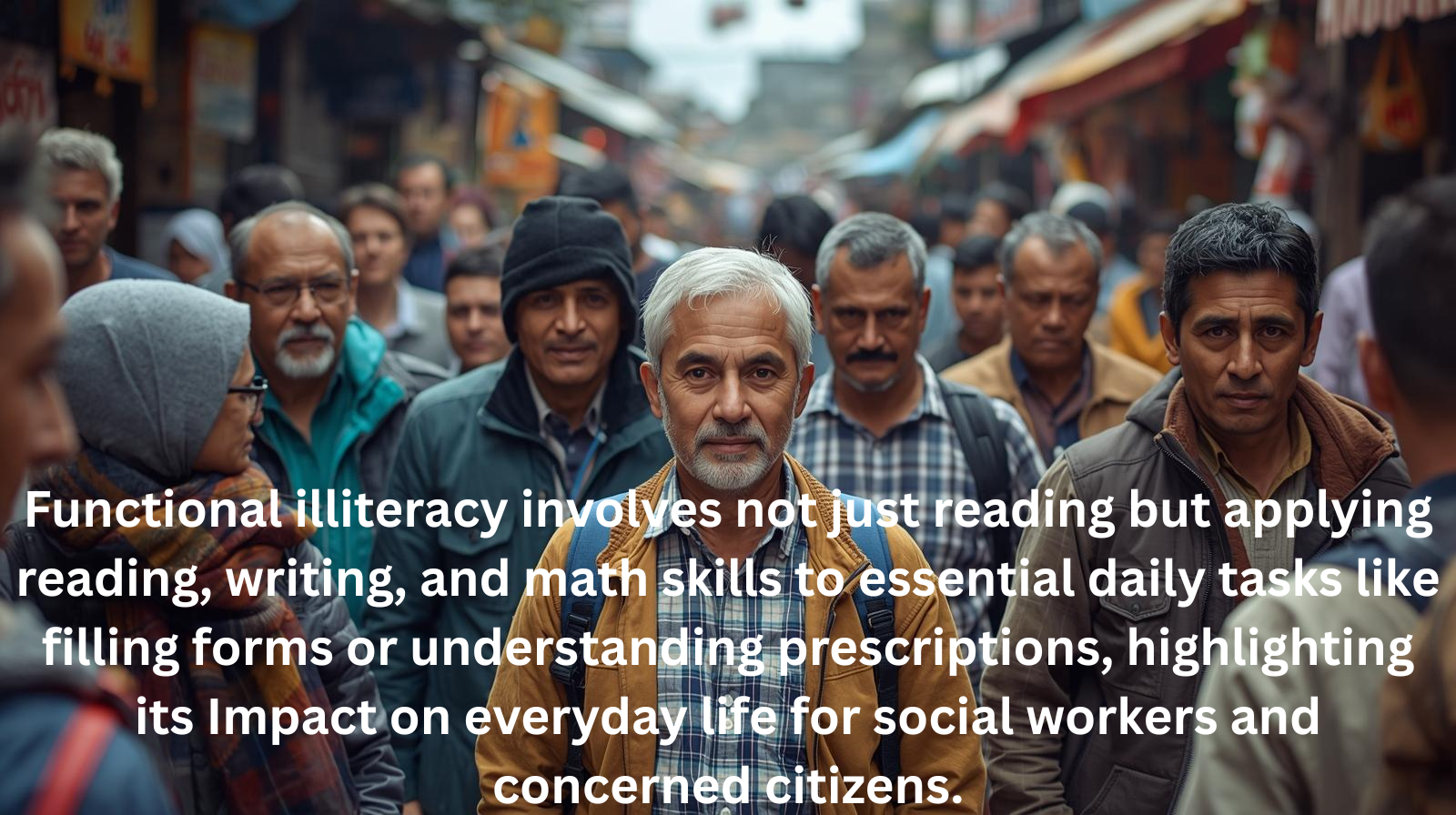
Functional illiteracy involves not just reading but applying reading, writing, and math skills to essential daily tasks like filling forms or understanding prescriptions, highlighting its Impact on everyday life for social workers and concerned citizens.
OECD and U.S. Department of Education assessments operationalize this using the PIAAC scale (0–500), with Level 1 (and below) denoting difficulty handling everyday reading tasks; adults at Level 2 can manage simple texts but struggle with complex information and inferences.
In short, functional illiteracy is an applied‑skills deficit: people may read words yet cannot reliably extract meaning and act on it in modern contexts.
2) Functional illiteracy is generally considered equivalent to low literacy.
The terms are often used interchangeably to describe the same condition. Both terms refer to individuals who can read introductory texts but struggle to apply these skills effectively in everyday, practical situations.
Definitions
- Illiteracy traditionally means the complete inability to read or write any simple statement.
- Functional illiteracy (or low literacy) refers to having basic reading skills (e.g., reading simple sentences or recognizing words) but being unable to comprehend and use written information to function effectively in modern society.
3) Disparities by Ethnic Groups
While White adults constitute the largest group with low literacy skills, the overrepresentation of Black, American Indian/Alaska Native, and Hispanic adults at the lowest levels underscores systemic disparities that demand immediate attention from policymakers and social workers.
|
Race/Ethnicity |
% Scoring Level 1 or Below (approx.) |
|
Black/African American |
36% |
|
Hispanic/Latino |
31% |
|
American Indian/Alaska Native |
Higher concentration in lower levels |
|
White |
12% |
|
Asian |
Lower concentration in lower levels |
Contributing Factors
Literacy disparities are often correlated with broader social issues.
4) Factors that contribute to these gaps include:
- Socioeconomic status (low-income individuals have a higher rate of low literacy).
- Access to quality education.
- Nativity status (non-U.S.-born adults are overrepresented in the low literacy population).
- Parental literacy levels and access to reading materials in the home during childhood.
- Historical systemic racism and discriminatory policies (such as Jim Crow laws) have long-term impacts on educational opportunities for Black individuals.
5) Image used in this article
You may notice that the image is predominantly white people, rather than an ethnic breakdown as seen above. When it comes to imaging, I have not found a source that allows for the portrayal of truth across various ethnic groups.