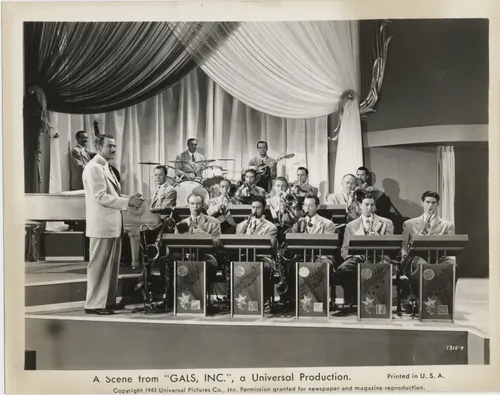
Glen Gray and the Casa Loma Orchestra were not some polite little society combo playing wallpaper music for bored people in satin shoes. They were one of the most disciplined, polished, and commercially important American dance bands of the years before swing turned into a national stampede.
The orchestra was active from 1929 to 1963, and in its prime, it helped lay the blueprint for what the big-band business would later become.
a) Casa Loma Stomp
https://www.youtube.com/watch?v=LvRqBsMoRiI
b) Song of India
https://www.youtube.com/watch?v=54q5WRe9kRo
c) No Name Jive
https://www.youtube.com/watch?v=Tp4_hb0pBB8
d) Begin the Beguine.
https://www.youtube.com/watch?v=Jr41mF1hGbk
e) Opus One
https://www.youtube.com/watch?v=ERLra8dHH90
f) Smoke Rings
https://www.youtube.com/watch?v=DVtE2inhL7Y
The outfit began life in Detroit as the Orange Blossoms, then adopted the Casa Loma name after an engagement at Casa Loma in Toronto. That may sound like a trivial branding exercise, but the name stuck, and the band built one of the strongest identities in American dance music. More importantly, this was not a one-person vanity project from day one — it was organized as a cooperative band, with members holding ownership interests and living under strict professional rules. In other words, these men were not running a circus. They were running a machine.
Enter Glen Gray, born in Illinois in 1900, a saxophonist who gradually became the public face and eventual leader of the orchestra. His leadership and vision helped define the band’s disciplined sound and professional standards, making the group a model for future big bands and solidifying their place in American music History.
What made Casa Loma matter was not gimmickry. It was precision, arrangement, and timing. The band had a hard-driving, controlled sound that mixed hot jazz energy with smooth dance-floor elegance, and much of that punch came from Gene Gifford’s arrangements, which gave the orchestra its bite. While lesser bands were content to sound busy, Casa Loma sounded organized — tight, professional, and confident. That sort of discipline is never accidental.
The band’s profile exploded through the radio, especially on Camel Caravan, where “Smoke Rings” became its signature calling card. Their innovative arrangements and disciplined style influenced subsequent jazz and big band musicians, helping pave the way for the swing boom that later made stars out of Goodman, Dorsey, and others.
Like nearly every big band of consequence, the orchestra eventually got hit by the postwar collapse of the touring dance-band economy. The original band disbanded in the late 1940s because economics has no sentimentality, and nostalgia does not pay the payroll. But Gray revived the name in the 1950s for a series of Capitol recordings made with top Hollywood studio musicians, extending the Casa Loma brand until he died in 1963. Even after the ballroom era was fading, Gray understood something essential: if the public memory still has value, you work it.
So, let’s put it plainly. Glen Gray and the Casa Loma Orchestra were not background figures. They were early architects of the American swing sound — disciplined, sharp, influential, and built with more structural integrity than half the noisy acts that came later. They helped turn dance music into a serious commercial force, and they did it with charts, control, and professional standards that most modern outfits would not survive for a week.