Government Gangsters-Part II of II
Power, Secrecy, and the Modern Crisis of Democratic Accountability
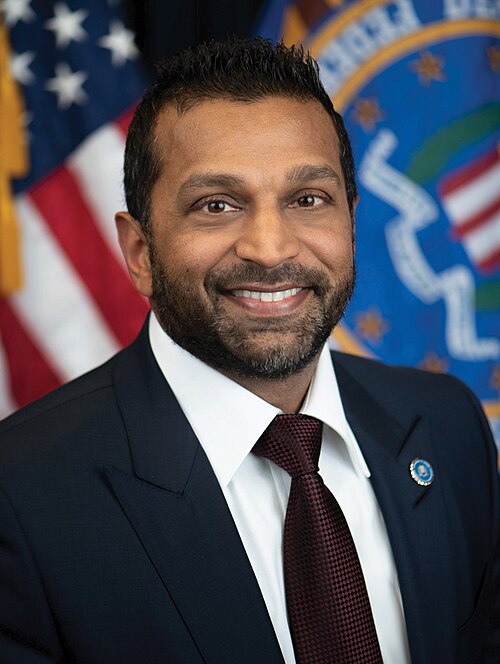
By Kesh Patel
A Crisis Hidden in Plain Sight
What if the greatest threat to American democracy isn’t foreign interference, partisan extremism, or declining civic trust—but power entrenched deep inside government itself? In Government Gangsters, former national security official Kash Patel advances a provocative thesis: that unelected bureaucratic institutions have accumulated authority without accountability, gradually displacing the constitutional balance between the state and the citizen.
Whether readers ultimately accept or reject Patel’s conclusions, the book raises an increasingly unavoidable question:
“Democracy erodes not when elections disappear, but when accountability does.”
The Deep State as Structure, Not Specter
Unlike popular caricatures, Patel does not describe the so-called “Deep State” as a secret society plotting in the dark. Instead, he frames it as something far more familiar—and arguably more dangerous: a system of incentives.
Career longevity, information control, reputational protection, and institutional risk aversion, Patel argues, produce predictable behavior. Over time, this behavior hardens into culture, and culture into power.
“Permanent bureaucracy and temporary consent are fundamentally incompatible.”
Drawing on his experience across the White House, the Department of Defense, the Intelligence Community, and the Department of Justice, Patel positions the Deep State not as a conspiracy but as an outcome. This bureaucracy has outlived meaningful oversight.
When National Security Replaces Democratic Consent
One of the book’s most compelling themes is mission drift. Agencies created to defend the nation against external threats are increasingly justifying domestic influence under the banner of “protecting democracy.”
The danger, Patel suggests, is not malicious intent—but unchecked authority.
“Mission creep in national security doesn’t announce itself—it quietly replaces democratic consent with classified justification.”
Secrecy, once a tactical necessity, becomes a governing principle. Classification expands, scrutiny contracts, and decisions affecting millions are made behind closed doors, shielded from public evaluation.
Oversight Without Consequence
Patel is particularly critical of the mechanisms designed to prevent abuse. Congressional oversight, inspector general reviews, and internal compliance systems exist on paper—but often fail in practice.
Why? Because oversight without consequence is merely theater.
“Oversight fails not from lack of Law, but from lack of consequence.”
According to Patel’s analysis, political polarization has weakened Congress’s willingness to challenge powerful agencies, while inspectors general operate within constraints imposed by the very institutions they are meant to police.
The result is a feedback loop: agencies investigate themselves, find procedural errors rather than misconduct, and continue operating unchanged.
Truth as an Institutional Asset
Another central claim of Government Gangsters is that truth itself has become conditionally released, delayed, or framed by institutional self-interest.
“When agencies become self-protecting, truth becomes conditional.”
Selective leaks, anonymous sourcing, and narrative coordination blur the line between intelligence and advocacy. In this environment, Patel argues, facts no longer speak for themselves; they are curated, contextualized, or withheld altogether.
“A government that controls information inevitably controls the narrative—and sometimes the outcome.”
Why the Argument Resonates Now
The book arrives amid historic distrust in American institutions. Confidence in Congress, federal agencies, and legacy media has declined steadily over the past decade. Patel’s thesis resonates not because it is universally accepted, but because it articulates a widely felt unease: that power feels distant, insulated, and unresponsive.
“If elections change leaders but not behavior, who is really governing?”
This question transcends party affiliation. It speaks to a deeper concern about whether democratic participation still meaningfully constrains institutional authority.
Reform, Not Retribution
Despite its confrontational tone, Government Gangsters does not call for dismantling government or purging institutions. Patel’s proposed remedies are structural rather than personal:
- Reasserting congressional authority
- Tightening classification standards
- Strengthening inspector general independence
- Enforcing penalties for misconduct
- Reanchoring agencies to constitutional limits
“The solution offered is structural reform, not political revenge.”
Whether such reforms are politically feasible remains uncertain. But Patel’s framework insists that restoring trust requires more than rhetoric—it requires enforceable accountability.
“Restoring trust requires consequences—not speeches.”
A Debate That Can No Longer Be Avoided
Critics will challenge Patel’s interpretations, dispute his emphasis, or question his motivations. That debate is both necessary and healthy. But dismissing the conversation outright may be the greater risk.
“The battle Patel describes is not left versus right—but permanence versus accountability.”
In an era when governance increasingly occurs through administrative action rather than legislation, the tension between expertise and consent has become central to the democratic experiment.
“A self-governing people cannot remain sovereign if the truth itself is classified.”
Final Assessment
Government Gangsters is not a comfortable book—but it is a timely one. Its value lies less in proving a single narrative than in forcing a reckoning with how modern power operates.
The question it ultimately leaves readers with is not whether institutions should be strong, but whether they should ever be untouchable.