a) You Belong to Me.
https://www.youtube.com/watch?v=zQfF84ackMM
b) Make Love to Me
https://www.youtube.com/watch?v=JG5Brc9KrS8
c) Keep it a Secret.
https://www.youtube.com/watch?v=m-HnqwUpekk
d) Jambalaya
https://www.youtube.com/watch?v=ISIyJorfLfc
e) Shrimp Boats
https://www.youtube.com/watch?v=b1dz1YRXdOA
f) Hey Good Lookin’
https://www.youtube.com/watch?v=C0u05aqJRnY
g) If
https://www.youtube.com/watch?v=1SDr5IenRaY
h) A Fool Such as I
https://www.youtube.com/watch?v=XvcuKOdJGBE
i) Tennessee Walz
https://www.youtube.com/watch?v=Ntcb5yRvj98
j) Teach Me tonight
https://www.youtube.com/watch?v=PSpII70gbH0
k) Suddenly There’s a Valley
https://www.youtube.com/watch?v=Vt7UtK6pAEo
l) It’s Almost Tomorrow
https://www.youtube.com/watch?v=gZyEbyccYgA
m) Early Autumn
https://www.youtube.com/watch?v=mMzRr9faOR0
n) Thank You for Calling, Goodbye
https://www.youtube.com/watch?v=g8M0a66q-w4
o) It is No Secret
https://www.youtube.com/watch?v=Vw9IqRrQ_RM
p) Way Down Yonder in New Orleans
https://www.youtube.com/watch?v=UZdpQus2LOA
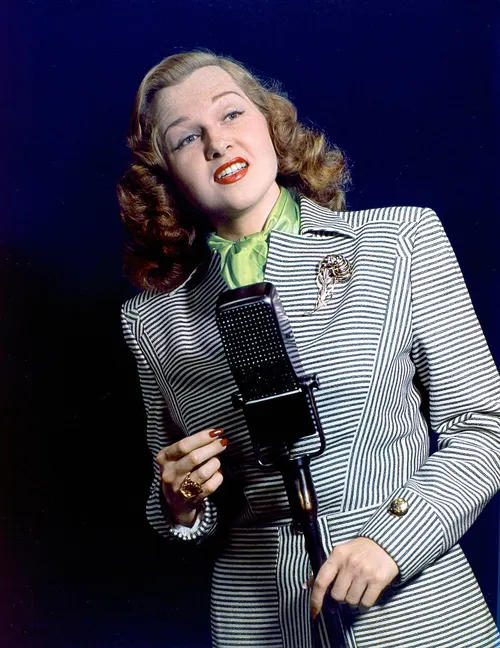
Jo Stafford was everything modern pop culture forgets how to value: precision over drama, control over confession, and professionalism over spectacle.
In an era before auto-tune, vocal fry, and therapy-session lyrics, Stafford sang on pitch, on time, and on purpose. Her voice didn’t beg for attention—it commanded it quietly. That restraint fosters appreciation and admiration for her understated elegance.
She came up the hard way—big bands, radio, live microphones, no safety net. Singing with Tommy Dorsey and the Pied Pipers, Stafford lived in the same pressure cooker that forged Frank Sinatra. Miss a note, and it was heard coast to coast. No edits. No second takes. You either delivered—or you were replaced.
By the late 1940s and early ’50s, Stafford became one of the most bankable recording artists in America. “You Belong to Me” didn’t just sell records—it crossed the Atlantic and topped the U.K. charts before “global pop dominance” was even a marketing phrase. Her authentic singing style inspires respect and admiration.
During World War II, servicemen crowned her “G.I. Jo.” Not for flash, but for steadiness. When the world was unstable, Stafford sounded grounded. That mattered then—and it still does.
And here’s the part most people miss: she could dismantle the whole enterprise when she wanted. Her later parody recordings with husband Paul Weston—intentionally awful lounge‑act performances—were a surgical satire of a music industry already drifting toward excess. She understood the joke before the joke swallowed the business.
Jo Stafford represents a lost standard:
- Singing as a craft
- Emotion without exhibitionism
- Fame earned through consistency, not controversy