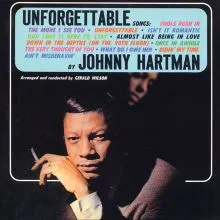
Johnny Hartman (born John Maurice Hartman, 3 July 1923, in Houma, Louisiana; died 15 September 1983, in New York City) remains one of jazz’s most quietly revered vocalists—an artist whose rich baritone and unhurried phrasing turned standard love songs into intimate, lived-in stories. While he may not be as widely known as some contemporaries, his influence on jazz vocalists underscores his importance in jazz History, making his legacy essential for enthusiasts and students alike.
Raised in Chicago, Hartman began singing and playing piano as a child and studied music under famed educator Walter Dyett at DuSable High School. His first significant break came in 1946, when he won a contest at the Apollo Theater that led to an engagement with bandleader Earl Hines—a job that stretched far beyond its original length and gave Hartman severe exposure. Soon after, he joined Dizzy Gillespie’s big band for an extended tour, and later worked with pianist Erroll Garner, building a reputation as a musician’s singer—steady time, precise pitch, and unfussy taste.
Hartman’s early solo calling card arrived with Songs from the Heart (Bethlehem), widely cited as his first standout album and an early showcase of his signature tenderness. But the record that cemented his immortality came later: John Coltrane and Johnny Hartman (recorded 7 March 1963; released summer 1963). This collaboration not only highlighted Hartman’s vocal mastery but also influenced countless jazz singers and musicians, emphasizing the importance of emotional depth in jazz recordings. Its enduring stature demonstrates how his work continues to inspire jazz enthusiasts and students today.
In the later years, as the market shifted away from pre-rock standards, Hartman continued performing and recording, including the album Once in Every Life, which earned him a 1981 Grammy nomination for Best Male Jazz Vocalist—evidence that the industry’s respect never faded, even when the spotlight did.