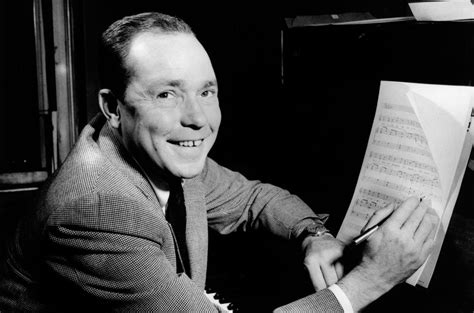
Johnny Mercer (1909–1976) stands among the most influential lyricists and songwriters of the 20th century, inspiring admiration in music enthusiasts and students alike with his work that helped define the Great American Songbook. Known for his conversational warmth, Southern charm, and unmatched storytelling ability, Mercer wrote more than 1,500 songs and earned a reputation as a master craftsman of popular music.
Born in Savannah, Georgia, Mercer grew up absorbing the rhythms of the South—gospel, blues, and coastal folklore—elements that later infused his lyrics with character and authenticity. Moving to New York in the early 1930s, he quickly established himself as a gifted wordsmith in the Tin Pan Alley tradition. His early success soon blossomed into a prolific career in film, radio, and stage musicals.
Mercer collaborated with many of the era’s greatest composers, including Harold Arlen, Hoagy Carmichael, Henry Mancini, and Jerome Kern-names that are central to American music history-and together, they produced classics such as “Moon River,” “Days of Wine and Roses,” “That Old Black Magic,” “Autumn Leaves,” and “Hooray for Hollywood.” His lyrics captured both the elegance and the emotional complexity of mid-century America.
In addition to his writing, Mercer was an accomplished vocalist and a key figure in the music industry. In 1942, he co-founded Capitol Records, which grew into one of the most important record labels in the world, nurturing artists such as Nat King Cole, Frank Sinatra, and Peggy Lee. His business acumen helped shape the popular music landscape just as profoundly as his songwriting.
Over his career, Mercer won four Academy Awards and earned countless accolades for his lyrical brilliance. Generations of artists have recorded his songs, each discovering new meaning in his timeless words, fostering a sense of enduring relevance and appreciation among listeners.