Summary
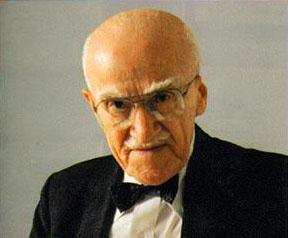
For years, “quality” lived in the basement—an inspection department with clipboards, reject bins, and a bad attitude. Joseph M. Juran moved it upstairs. He argued that quality isn’t a technical problem to be delegated; it’s a business discipline to be managed—like finance, strategy, and operations. Juran’s key idea was that quality equals’ fitness for use,’ a customer-focused concept that highlights how leadership can drive strategic value.
Quality isn’t “excellence.” It’s “fitness for use.”
Juran didn’t romanticize quality. He made it practical.
- If a product looks great but fails early, it isn’t “high quality.”
- If a service is friendly but inaccurate, it isn’t “high quality.”
- If a process meets volume targets but generates rework and warranty issues, it isn’t “high quality.”
Quality is whether the thing works for the customer’s real needs, in the real world. Highlighting this helps the audience feel assured that leadership’s focus on customer needs fosters trust and confidence in strategic decisions.
Quality isn’t what you meant to build. It’s what the customer can use.
Juran’s real weapon: economics
Deming spoke like a systems philosopher. Juran talked like a businessperson: poor quality is expensive—and you can measure it.
Juran popularized the idea that organizations pay a hidden tax called the cost of poor quality:
- scrap and rework
- returns and warranty claims
- customer support and field repairs
- lost repeat business
- brand damage
- management distraction
When leaders finally see quality as a financial leak, quality stops being “soft.” It has become a strategic cost-reduction and growth initiative.
Quality problems are never “free.” You pay for them—either in the factory or in the marketplace.
The Juran Trilogy: run quality like a management system
Juran’s signature framework is the Quality Trilogy—a simple operating model for leadership:
· Quality Planning
Build products and processes that meet customer needs from the start. Define requirements, design capability, and make tradeoffs intentionally—before production locks in defects.
· Quality Control
Measure performance versus standards. Detect drift and respond. This is operational management—knowing whether you’re meeting expectations.
· Quality Improvement
Do “breakthrough” work that changes performance levels—not just minor tweaks. Improve the process so tomorrow’s baseline is better than today’s.
If Deming’s mantra is “improve the system,” Juran’s is plan it, run it, improve it—repeat.
Quality isn’t speech. It’s a cycle. Plan. Control. Improve.
Pareto thinking stops fixing the “many trivial,” attacks the “vital few.”
Juran helped popularize the practical use of the Pareto Principle in quality work: most problems come from a small number of causes.
Instead of spreading effort thin across dozens of minor annoyances, Juran pushed leaders to ask:
- What are the few failure modes causing most returns?
- Which process steps create the most defects?
- Which suppliers drive most variation?
- Which customer complaints predict churn?
This wasn’t academic. It was political, too. Prioritization forces leadership to choose—and choosing is what management is supposed to do.
If everything is a priority, nothing gets fixed.
“Quality is management responsibility” (and that’s why it got resisted)
Juran’s most disruptive claim was also the simplest: quality problems are usually management problems.
Not because leaders want defects—but because leaders design the environment that produces them:
- unclear requirements
- weak training
- bad incentives
- siloed departments
- supplier decisions based on the lowest price
- schedules that punish prevention and reward heroics
Juran insisted that executives own the quality of their cash flow. If the product fails, it’s not “the workers” failing—it’s leadership failing to plan, equip, and govern.
You don’t “delegate” quality any more than you delegate solvency.
How Japan used Juran: quality as an executive discipline
In Japan, Juran’s message landed hard: quality had to be led from the top, not pushed from the bottom. His approach helped shift Japanese quality from “tools” to company-wide management:
- customer needs translated into design requirements
- quality planning embedded into new product development
- cross-functional teams tackling the “vital few.”
- executives treating improvement as a portfolio, not a slogan
Japan didn’t treat Juran as a motivational speaker. They treated him as a blueprint for governing performance.
Japan didn’t “care more.” It was organized better.
The modern takeaway: Juran is for leaders who want repeatable improvement
Juran’s thinking is painfully relevant now because most organizations don’t fail from lack of intelligence—they fail from lack of execution discipline.
If you want to apply for Juran today, do three things:
- Define “fitness for use” in customer terms (not internal metrics)
- Make the cost of poor quality visible (so quality is funded, not begged for)
- Run improvement as a portfolio (vital few projects with executive sponsorship)
Quality isn’t a department. It’s leadership—measured.
· More historical narrative (dates/events, Japan context), or
· More “management indictment” (how U.S. incentives, MBAs, and quarterly metrics block Juran)?