Summary
The “Ol’ Professor” of Swing
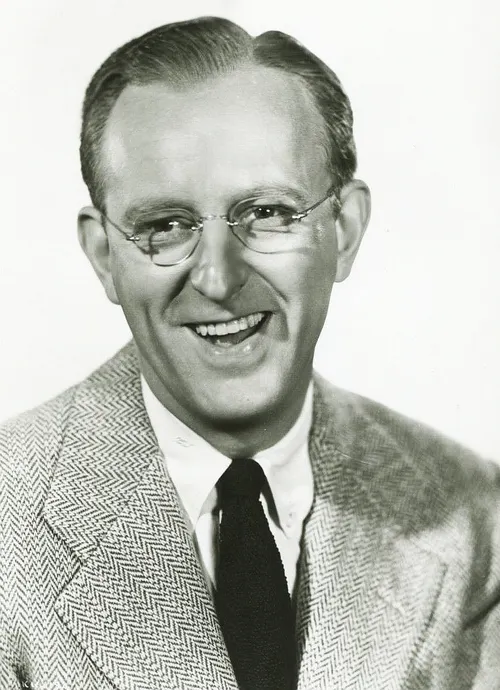
Kay Kyser (born James Kern Kyser, 18 June 1905 – 23 July 1985) was a highly influential American band leader and radio personality during the 1930s and 1940s. Known for his cheerful stage presence and the persona of “The Ol’ Perfessor,” Kyser combined swing music, comedy, and audience interaction into a style that made him a national sensation and shaped entertainment trends of his era.
Raised in Rocky Mount, North Carolina, Kyser was the son of two pharmacists—his mother notably the first registered female pharmacist in the state. While attending the University of North Carolina at Chapel Hill, Kyser’s energetic personality made him a campus star as a cheerleader and student leader. His charisma caught the attention of fellow student Hal Kemp, who encouraged him to take over leadership of the university dance band, setting Kyser on the path to his future career.
By the mid-1930s, Kyser had built a popular touring orchestra, but his breakthrough came with the creation of his innovative musical quiz format, “Kay Kyser’s Kollege of Musical Knowledge.” The program debuted on the radio in [1938] and quickly became one of the nation’s top-rated shows, inspiring listeners with his creativity and leadership in entertainment. Kyser’s catchphrases—such as “That’s right — you’re wrong!”—became widely quoted across the country.
Although the radio show made him a household name, Kyser’s band also stood firmly on its own musical merits. His orchestra scored 11 number‑one hits, and many of his band members became stars in their own right—a rarity in the significant‑band era. Kyser also appeared in several Hollywood films, further expanding his popularity.
During World War II, Kyser dedicated significant time to entertaining U.S. troops, both domestically and abroad. His efforts to boost morale made audiences feel proud of his service and commitment to the community. His goodwill efforts cemented his status as one of the era’s most admired entertainers. After the war, however, Kyser surprised the entertainment world by retiring at the height of his career in [1950]. He settled in Chapel Hill and devoted the rest of his life to public service, philanthropy, and Christian Science work, including support for healthcare initiatives and North Carolina Public Television.