Summary
Knowing many facts alone can lead to errors if not combined with judgment, underscoring the need to apply knowledge judiciously to improve engagement. That’s because knowledge is information you possess—but wisdom is judgment you practice.
“Knowledge tells you what’s true. Wisdom tells you what to do with the truth.”
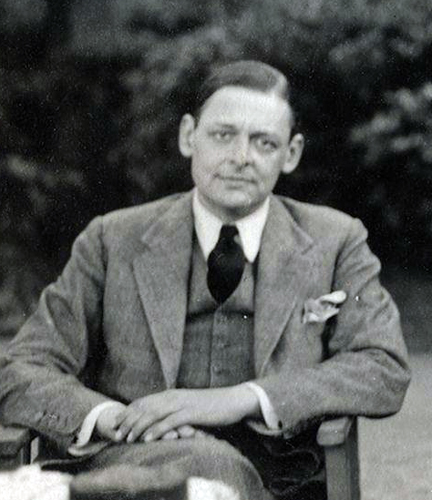
T.S. Eliot famously warned about a culture that trades wisdom for knowledge and knowledge for mere information. (The image is of T.S. Eliot)
The Core Difference (In One Sentence Each)
Knowledge is what you learn.
Wisdom is how you apply what you’ve learned—at the right time, in the right way —inspiring trust in your ability to make sound decisions.
“Knowledge fills the mind. Wisdom guides life.”
What Knowledge Looks Like
Knowledge is the accumulation of facts, information, and skills—often gained through:
- Education (school, training)
- Research (books, articles, classes)
- Observation (watching others)
- Experience (trial, error, repetition)
Knowledge is typically external and transferable: it can be acquired quickly from others.
In short: knowledge answers, “What is it?” and “How does it work?”
What Wisdom Looks Like
Wisdom is the ability to use knowledge with discernment, insight, and good judgment.
It usually grows through:
- Lived experience (including mistakes)
- Reflection (thinking deeply about outcomes)
- Maturity (seeing long-term consequences)
- Character (choosing what’s right, not just what’s possible)
Wisdom is often internal and earned: it builds slowly because it’s forged in real decisions.
In short: wisdom answers, “When should I do this?” and “Should I do it at all?”
“Knowledge is a toolbox. Wisdom knows which tool to grab—and when to put it down.”
True Story
Here’s a true story about a friend’s grandmother
“My grandmother died just short of 103. The last ~5 years of her life, she lived in an assisted living facility with very little care.
There is regular staff turnover in these facilities, so she was often introduced to a new staff Member, who was typically very young.
This occurred one day, and the new staff Member, a young woman, was amazed that Grandma Donna was over 100 and still sharp as a tack.
The young lady commented, “I bet there is so much that you can teach me. Grandma responded, “YES, but will you LISTEN?”
Her statement was profound because pride and arrogance impede the rapid learning that seasoned, successful people often demonstrate. We all need to spend more time listening.”
Quick Skim Comparison (Get It in 20 Seconds)
Source
- Knowledge: external (books, schools, experts)
- Wisdom: internal (experience, reflection, intuition)
Nature
- Knowledge: theoretical and factual
- Wisdom: practical and insightful
Speed
- Knowledge can be gained quickly
- Wisdom: develops over time
Function
- Knowledge: knowing what to do
- Wisdom: knowing when and how to do it
Classic Example
- Knowledge: “A tomato is a fruit.”
- Wisdom: “Don’t put it in a fruit salad.”
“Knowledge is seeing the map. Wisdom is choosing the route.”
How They Relate: The Sequence That Matters
Wisdom usually depends on knowledge, but knowledge does not guarantee wisdom.
- You can be knowledgeable without being wise (facts without judgment).
- It’s hard to be truly wise without knowledge (judgment without substance).
Think of it this way: knowledge gives you options; wisdom helps you choose.
Biblical Perspective (Truth in Action)
In many religious contexts, knowledge is awareness of truth or Scripture, while wisdom is truth lived out—the ability to apply what’s right in real situations.
A typical framing: wisdom begins with humility before God, and knowledge flows from that foundation.
“In spiritual terms, knowledge is hearing the truth. Wisdom is walking in it.”
Philosophical Perspective (Knowing vs. Doing)
Philosophers have long separated learning truth from living well:
- Aristotle distinguished sophia (theoretical wisdom—understanding enduring truths) from phronesis (practical wisdom—moral discernment in daily life).
- Translation for modern life: having data isn’t the same as having direction.
“Information is noise. Knowledge is clarity. Wisdom is courage.”
And the world doesn’t just need more intelligent people—it needs people who can use what they know well.
Real-Life Example: Wisdom in Action
Wisdom in the Real World: The “Right Loan” Decision
A mortgage broker runs the numbers for a couple eager to buy at the top of their budget. On paper, they qualify—their income clears the lender’s thresholds, the credit score is solid, and the automated underwriting says Approve/Eligible. That’s knowledge: the rules, the ratios, the product guidelines.
But the broker asks one more question:
“If one of you loses your job for 90 days, what happens?”
They review the couple’s real life: a baby on the way, a car payment, minimal savings, and an adjustable expense profile. Rather than pushing the maximum loan (which would also pay the broker more), the broker recommends a lower purchase price and a payment that leaves room for an emergency fund.
The couple is disappointed—until six months later, when a layoff hits their industry. Because they bought with margin, they don’t miss payments, don’t panic-sell, and don’t spiral into high-interest debt.
Knowledge: “You qualify.”
Wisdom: “You can afford it—even when life gets messy.”
Takeaway: Wisdom doesn’t just optimize for approval. It protects for survival.
Leadership Example: Wisdom in Action
Wisdom in Leadership: The “Don’t Win the Meeting—Win the Team” Moment
A department head learns that a key project is behind schedule. The data are precise: missed milestones, delayed deadlines, and a few visible errors. Knowledge says: call a meeting, identify the mistake, correct it fast, and hold someone accountable—publicly if needed—to send a message.
But the leader pauses and asks: “What outcome do I want—compliance today or commitment tomorrow?”
Instead of blasting the team in a large meeting, the leader does three wise moves:
· Private first, public second. They address performance issues one-on-one, preserving dignity and preventing the team from entering self-protective mode.
· Fix the system, not just the person. They discover the real bottleneck: unclear handoffs and a workload that exceeded capacity.
· Create clarity under pressure. They reset priorities, cut two low-value tasks, and commit to a tighter weekly check-in cadence.
Two weeks later, the project is back on track—and something else improves too: the team becomes more candid about risks earlier, because they’ve learned they won’t be punished for surfacing reality.
Knowledge: “Who messed up?”
Wisdom: “What’s breaking the process—and how do we correct it without breaking the people?”
Takeaway: Wise leaders don’t just drive results—they protect trust while getting results.
Historical Leadership Example: Wisdom in Action
Wisdom in History: George Washington Chooses the Republic Over Power
At the end of the American Revolutionary War, George Washington was the most powerful and admired figure in the new nation. He commanded the army, had public loyalty, and—if he wanted—could have leveraged that influence to hold power indefinitely. Knowledge (and History) suggested a familiar path: victorious generals often become strongmen or kings.
Washington did something rare: he returned power.
In 1783, he resigned his military commission and returned to private life. Later, after serving as the nation’s first President, he stepped down voluntarily rather than cling to office. Those choices weren’t flashy. They didn’t “win” a debate or crush an opponent. But they established a precedent that made the presidency—and the country—safer.
Knowledge: “You have the leverage to keep control.”
Wisdom: “If I keep control, I weaken the very system we fought to create.”
Why this is wisdom (leadership lens):
- He prioritized long-term legitimacy over short-term authority.
- He modeled restraint, which strengthened trust in institutions.
- He made it normal for leaders to leave, reducing the risk of power becoming permanent.
Takeaway: Wise leadership isn’t just knowing how to gain power—it’s knowing when to release it for the good of the mission.
Bottom Line
If you want a clean takeaway, here it is:
- Knowledge helps you explain.
- Wisdom enables you to decide.