Summary
The Bay Area’s Queen of Classic Swing & Blues highlights the role of Lavay Smith & Her Red Hot Skillet Lickers in preserving and energizing jazz and blues traditions for modern audiences, making their significance clear to readers.
Lavay Smith is an American vocalist best known for reviving and reinvigorating the sound and feel of classic swing, jump blues, and vintage jazz for modern audiences. From her base in San Francisco, she has fronted Lavay Smith & Her Red Hot Skillet Lickers, a “little big band” built for dance floors: tight horn charts, a driving rhythm section, and a frontwoman whose phrasing nods to the great jazz-and-blues vocal stylists of the 20th century.
Early roots: a singer formed by records, travel, and live stages
Born in Long Beach, California (1967), Smith grew up in a household where jazz and blues were part of the everyday soundtrack—an influence she has openly credited as foundational to her later style. As a child, she absorbed the voices and approaches of artists such as Fats Waller, Bessie Smith, Helen Humes, Billie Holiday, and Dinah Washington, developing an ear for swing-era timing and blues-era emotional directness.
A formative chapter came when her family relocated to the Philippines when she was young; as a teen, she sang in a rock band in Manila, performing for members of the American military—an early apprenticeship that honed projection, stage presence, and repertoire discipline. After returning to California, she eventually moved to San Francisco, where she performed in coffeehouses and accompanied herself on guitar. This setting often demands command of both storytelling and groove.
The Red Hot Skillet Lickers: building a “little big band” with big-band Impact
In 1989, Smith co-founded the Red Hot Skillet Lickers with pianist/arranger Chris Siebert—a Partnership's that would shape the band’s identity: Smith’s brassy, blues-savvy vocals atop Siebert’s period-fluent arranging and bandleading. The group’s name itself signals their aesthetic: “red hot” energy blended with a wink to early American roots traditions (a nod to the 1920s-era Skillet Lickers referenced in biographies).
From the outset, the Skillet Lickers leaned into an accessible, danceable approach—music that respects jazz History and invites audiences to move and enjoy.
A signature sound: vintage influences with modern authority
Smith’s vocal identity is frequently described in terms of classic predecessors, but the key is how she recombines them: torch-song control, blues grit, and swing-era bounce in one performance. Promotional bios and venue notes often highlight her stylistic lineage—especially Dinah Washington and Bessie Smith—while still emphasizing the band’s craftsmanship and the punch of its horn writing.
That emphasis on arrangements matters. In profiles of the ensemble, Siebert’s role as arranger and musical director is repeatedly foregrounded, underscoring that the group’s appeal is not just a charismatic singer—it’s a full-band concept with carefully constructed charts and solo space for seasoned players. The result is a sound that can swing hard enough for lindy hoppers, while still working as a listening experience for jazz and blues fans.
Band format: horns up front, rhythm locked in
Smith has toured with an eight-piece “little big band” featuring trumpet(s), trombone, saxophones, and a rhythm section-piano/keys, guitar, bass, drums-covering a wide range of 1930s–1950s material with a punchy, full sound.
Recordings and milestones: three core albums and a chart moment
The group’s recorded output is often summarized through three key releases:
- One Hour Mama (1996)
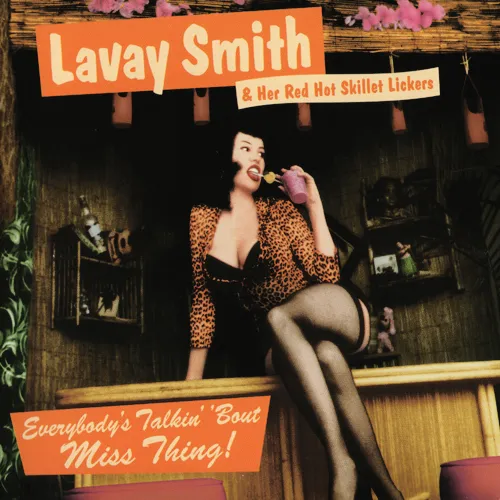
- Everybody’s Talkin’ ’Bout Miss Thing! (2000)
- Miss Smith to You! (2009)
A notable benchmark came when the song “Everybody’s Talkin’ ’bout Miss Thang” reached No. 24 on Billboard’s jazz chart (as cited in widely used biographies). AllMusic’s discography timeline also situates these releases as the core studio arc that defines her best-known period on record.
Live reputation: a working band that keeps the scene alive
If Smith’s albums establish the style, her ongoing live schedule is what sustains the brand. Her official site regularly lists performances—often in San Francisco—showing a continued emphasis on club stages where swing and blues live best. Venues and presenters frame her shows as time-travel experiences through the “roaring ’20s” and “swinging ’40s,” highlighting not only her vocals but the band’s horn-driven arrangements and dance-floor energy.
This matters culturally: swing and jump blues are social music, and Smith’s act functions as a bridge between jazz History and contemporary nightlife—especially in the Bay Area, where her group is repeatedly positioned as a staple of the local scene.
Why Lavay Smith matters: preserving tradition with authenticity and vitality, inspiring respect and admiration among jazz and blues fans.
Lavay Smith’s durability comes from a clear artistic bet: take classic forms seriously, but deliver them as living entertainment. The Skillet Lickers’ approach is neither novelty nor costume; it’s closer to repertory theatre—period-correct language delivered with modern confidence, strong musicianship, and an understanding that dance audiences can spot the difference between “retro” and real.
Just as important, her career highlights how regional scenes sustain American roots music. By staying active, touring, and anchoring a consistent ensemble, she demonstrates that swing and jump blues can remain part of a working musician’s present—not just a historical footnote.
A quick “starter listen”
a) I’ve got A Feelin’
https://www.youtube.com/watch?v=Tda9dOqj6cY
b) Blue Sky’s
https://www.youtube.com/watch?v=LBFA5GvAA78
c) Hootie Blues
https://www.youtube.com/watch?v=sq3sIiPFqZw
d) Gee, Baby Ain’t I Good to You
https://www.youtube.com/watch?v=JS80v1S1fAk
e) Oo Poppa Do
https://www.youtube.com/watch?v=MvdprHA7gb0
Sources / Further reading
-
Lavay Smith – Wikipedia
-
Lavay Smith – AllMusic artist bio
-
Lavay Smith & Her Red Hot Skillet Lickers – official site
-
MusicianGuide biography: Lavay Smith and Her Red Hot Skillet Lickers
-
AllMusic: Miss Smith to You album page
-
Discogs: Lavay Smith & Her Red Hot Skillet Lickers discography
-
Event listing example (Biscuits & Blues / Eventbrite)