Summary
Some songs politely announce a new direction.
https://www.youtube.com/watch?v=5wRM-t7wvF0
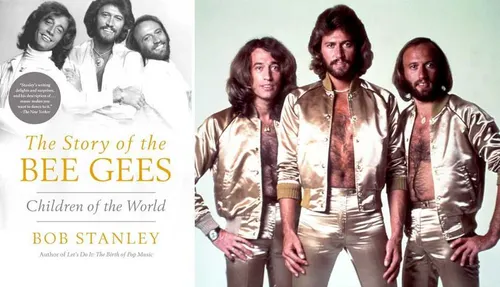
“Nights on Broadway” doesn’t bother with manners. It walks in, grabs the room by the collar, and informs everyone that the Bee Gees are no longer interested in being remembered only as elegant balladeers with pretty harmonies and melancholy manners.
Released in September 1975 as the second single from Main Course, right after “Jive Talkin’,” the record marked a hard pivot toward a tighter, tougher, more rhythm-driven sound—and it backed that pivot with a Top 10 U.S. hit, reaching No. 7 on the Billboard Hot 100.
This is not a fragile little pop confection. It is a transitional record with teeth. The Bee Gees had already started retooling their sound by the time they got to Main Course, and Arif Mardin’s production gave them the room—and the nerve—to stop admiring the past and start building the future.
The song was recorded at Criteria Studios in Miami in early 1975, and you can hear a band that has quit asking for permission. The groove is tighter, the pulse is meaner, and the arrangement has more urban muscle than the softer, ornate Bee Gees records that came before it. This was the sound of a group updating its business model before nostalgia could turn them into a museum exhibit.
And then there is the real headline: Barry Gibb’s falsetto.
That voice did not just appear here as a decorative flourish. It arrived like a discovery that changed the family business. Multiple accounts trace the moment to producer Arif Mardin, who asked whether one of the brothers could “scream” in the chorus to push the track harder. Barry answered by climbing into a falsetto that would soon become one of the most recognizable sounds in pop music. That is the sort of accident that does not stay accidental for long.
On “Nights on Broadway,” the Bee Gees did not merely record a strong follow-up single—they stumbled into the vocal signature that would help define their next era.
What makes the song so effective is that it does not abandon melody in pursuit of swagger. Too many acts try to reinvent themselves and end up sounding like middle-aged tourists in somebody else’s nightclub. Not here. The Bee Gees still sound like master songwriters. The harmonies are still polished. The structure is still smart. But the song carries more grit, more motion, and more nightlife pulse. It has a funk-and-soul edge without losing the craftsmanship that made the brothers formidable in the first place. In other words, it is reinvention without panic—style change without artistic bankruptcy.
Lyrically, the song lives in pursuit, longing, and emotional frustration, set against the theatrical, restless mood suggested by Broadway after dark. It is not some tidy love song wrapped in sentimental ribbon. It feels crowded, urgent, and slightly feverish—the sound of desire moving through a city that does not care whether you get what you want. The Bee Gees always understood heartbreak, but here they give it a neon sign, a backbeat, and a pulse rate. That is the trick. They took emotional vulnerability and made it move with streetlight momentum.
If “Jive Talkin’” was the comeback handshake, “Nights on Broadway” was the follow-up that told the industry the Bee Gees were not visiting this new sound—they were moving in. It gave them back-to-back U.S. Top 10 hits for the first time in years, and it proved their resurgence was not a lucky bounce but the beginning of a serious second act. The song may not get quoted as often as the later disco juggernauts, but that misses the point. This record is not merely a hit. It is a hinge point—the moment the machinery of the later Bee Gees empire starts turning with visible force.
And that is why “Nights on Broadway” matters.
It is the sound of talented men politely refusing to become outdated.
It is the sound of a band hearing the future crack open and stepping through it before the door swings shut.
It is smooth, yes—but not soft. Polished, yes—but not passive. Beneath the melody is something tougher: ambition with rhythm, instinct with discipline, and reinvention without apology.
In plain English:
This is the record where the Bee Gees stopped reminiscing and started taking over.