Summary
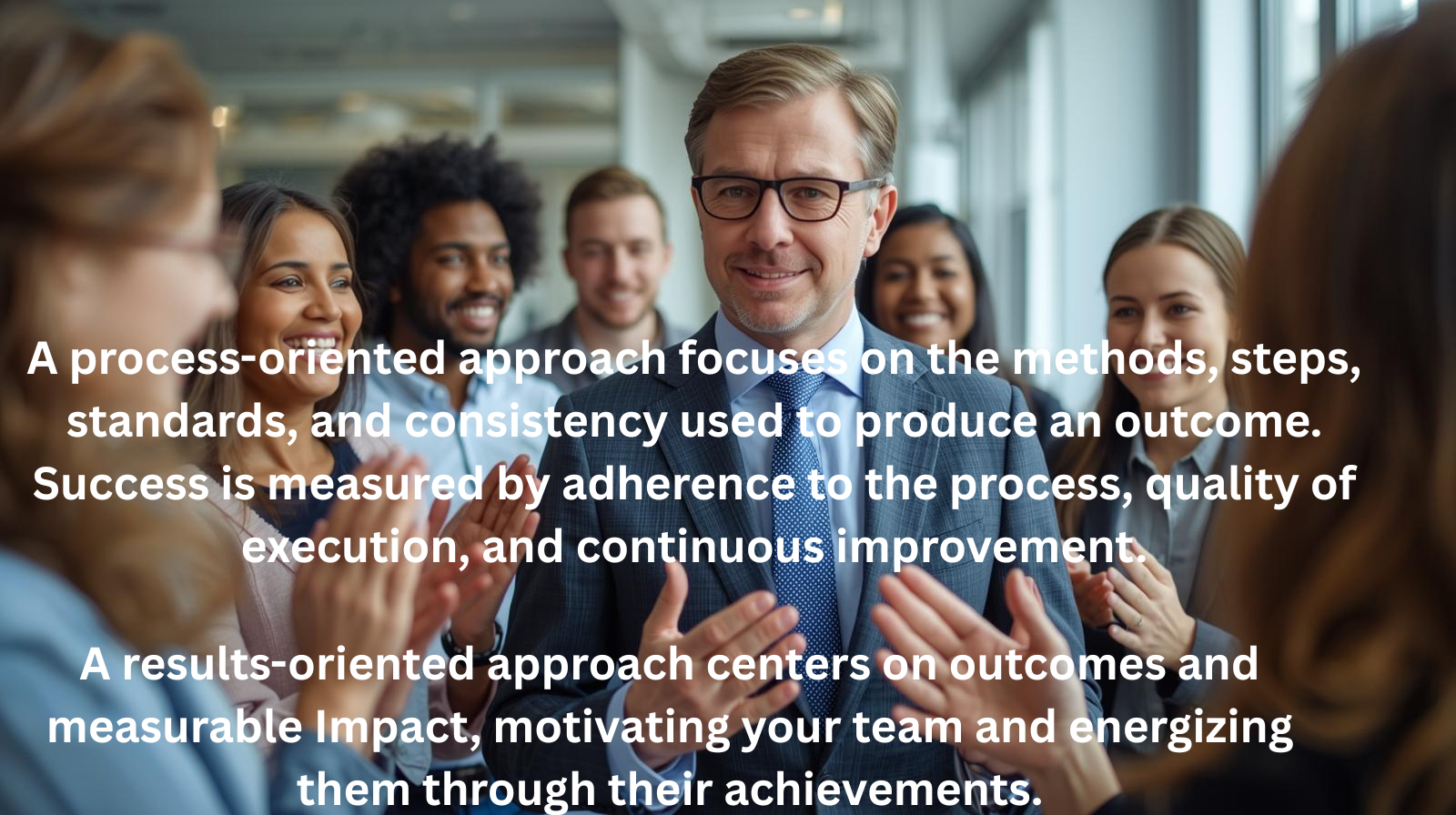
For a general overview of the definition and the distinction between process-oriented and results-oriented people, please refer to my article below. https://danharkey.com/post/a-clear-distinction-between-process-and-results-orientation
1) Start with mission-true “results” (what success looks like at OHI‑SD)
OHI‑SD’s mission anchor (what outcomes must serve)
OHI describes its mission as serving “as a change agent for humankind” by improving physical, mental, and spiritual well-being.
OHI also positions itself as a faith-based, holistic healing retreat with an integrated body‑, mind‑, and spirit program.
Convert that mission into 4 measurable “North Star” results (nonprofit-appropriate)
These are intentionally outcome-centric (not activity-centric):
· Guest transformation (improvement in body/mind/spirit well-being from intake → checkout → 30/90 days post)
Why it fits: OHI’s program is designed for “physical, mental, spiritual, and emotional transformation.”
· Program integrity & completion (how well guests engage in the integrated 21-day program and its core disciplines)
Why it fits: OHI’s holistic healing program is a 21-day, 3-week program that emphasizes class participation as essential to receiving program benefits.
· Access & generosity (scholarship reach + affordability pathways without mission drift)
Why it fits: OHI explicitly promotes generosity and references its scholarship/missionary programs under “About Us.”
· Sustainability & stewardship (financial resilience + staff sustainability supporting the mission)
Why it fits: OHI lists stewardship and service among its core values, and operates structured tuition/fees for the program.
2) Define a small results scoreboard (what you review weekly)
A results culture requires a “scoreboard” that leadership and staff can see and influence.
A. Mission/Impact results (lagging indicators)
- Guest outcomes index (0–100 composite): energy, sleep, mood/stress, spiritual well-being, confidence to sustain habits (intake vs checkout)
- 90-day sustainment rate: % reporting continued adherence to at least 3 core practices learned at OHI
- Return rate: % completing weeks 2–3 over multiple stays (since OHI supports segmented completion) [
B. Operational results (leading indicators)
- Weekly occupancy & length of stay (LOS) vs target (OHI‑SD operates a guest-room campus in Lemon Grove)
- Program participation rate: class attendance and small-group session participation (not to police—used as predictor of outcomes)
- Guest experience: top 3 friction points from weekly pulse survey (food, schedule clarity, room issues, campus quiet)
C. Risk/integrity results (guardrail monitoring)
- Safety incidents (falls, dehydration-related complaints, adverse events reported)
- Boundary breaches (outside food/alcohol/pets/visitor violations; disruptive behavior)
- Non-medical compliance (staff language adherence: no medical advice; referrals to physician)
Weekly meeting format (45 minutes): With an agenda
10 min scoreboard → 15 min top constraints → 15 min commitments → 5 min “one improvement experiment”
3) Make guardrails explicit to empower staff and reinforce their role in upholding mission integrity, ensuring clarity and confidence in enforcement.
Because OHI is a healing mission, not a medical facility, and intentionally maintains a “closed campus” environment, guardrails should be crystal clear and enforceable.
The 10 guardrails OHI‑SD should define in writing (plain English + thresholds)
These guardrails, along with the results map and scoreboard, will be incorporated into onboarding and ongoing training, equipping staff with the knowledge to uphold standards and contribute to measurable outcomes.
· Non-medical boundary (STOP)
o Staff do not diagnose/treat; guests are advised to consult physicians and not discontinue meds without physician guidance.
· Self-reliance requirement (SLOW with support plan)
o Guests must be sufficiently self-sufficient; if not, bring a support person (with defined assistance options).
· Food integrity (STOP)
o No outside food/drink or delivery; meals are designed to support detoxification.
· Alcohol-free campus (STOP)
o No alcohol on campus, including in rooms.
· Pet restrictions (STOP; limited service animal rules)
· No pets; limited service animal allowances in specified areas with advance notice. [
· Closed campus (STOP)
o Only staff and registered guests on campus; visitors only during Sunday open house.
· Respect & spiritual harmony (STOP for proselytizing/disruption)
o Guests agree not to proselytize and must honor others; disruptive behavior can result in ejection.
· Device/quiet culture (SLOW—restricted zones)
o Mobile devices are restricted in public areas; preserve a tranquil environment. [
· Disability accommodation process (SLOW with notice + documented plan)
o OHI states a commitment to reasonable accommodations with notice and defined limitations consistent with its religious-organization status.
· Identity/organizational status clarity (STOP on misrepresentation)
- OHI‑SD is not a hotel/spa/healthcare facility/public accommodation; it is a tax-exempt religious nonprofit mission.
What “clear guardrails” look like at OHI‑SD (format)
Create a standard for every guardrail:
- Rule: one sentence (“No outside food or deliveries on campus”)
- Trigger: what counts as a violation (delivery observed; guest reports; staff finds)
- Response: warn/escalate/remove privilege / ask to leave (if disruptive)
- Owner: role accountable (Guest Services Director, Program Director, Exec Director)
- Exception policy: if allowed, who approves + how logged (e.g., ADA-related accommodations) [
4) A 90-day “process → results” transition plan for OHI‑SD
Days 0–15: Align leadership on outcomes + guardrails (fast workshop)
Deliverables
· One-page “OHI‑SD Results Map.”
o Inputs → Program components → Outputs → Outcomes (guest transformation + access + sustainability)
· Guardrails Charter v1 (10 guardrails above)
· Scoreboard draft (10–12 total metrics, max)
How
- Use OHI’s stated core values (Holism, Generosity, Stewardship, etc.) as the evaluation filter for what becomes a “result.”
Days 16–30: Baseline measurement + quick wins (prove the shift is fundamental)
Implement
- Guest intake & checkout survey (5 minutes each): body/mind/spirit self-rating + top goal + constraints
- Weekly pulse survey (2 questions): “What helped most?” “What blocked you most?”
- Incident logging (simple): dehydration symptoms reported, falls, conflicts, policy violations
Quick wins that move outcomes
- Improve clarity in the “first 48 hours”: orientation, what to expect from the 21-day structure, class expectations, and food rules (since participation and meal discipline are central).
- Tighten “non-medical language” scripts for staff: consistent phrasing that refers guests back to their physician when needed.
Days 31–60: Pilot autonomy (results ownership within guardrails)
Pick two pilot areas where teams get freedom to improve outcomes:
Pilot A: Reservations → Arrival readiness
- Outcome: fewer “not a good fit” arrivals; higher week‑1 completion; fewer early departures
- Tactics: improved pre-arrival call script + readiness checklist (self-reliance, meds, mobility support, expectations)
Pilot B: Guest Services → Experience friction reduction
- Outcome: higher guest outcome scores + fewer complaints about noise, scents, policy confusion
- Tactics: clearer quiet zones, fragrance reminders, device policy reminders, visitor boundary reinforcement
What changes culturally
- Teams are evaluated on results (completion, experience, outcome score lift) rather than “did you follow every step.”
Days 61–90: Standardize what works + lock it into reviews/training
Deliverables
- OHI‑SD Operating Playbook v1:
- Scoreboard, guardrails, decision rights, exception process, and “definition of done” for each department.
- Manager coaching cadence: weekly scoreboard + monthly root-cause review (not blame-based)
- Performance expectations update:
- 60–70% outcomes + 20–30% leading indicators + 10% guardrail adherence (guardrails often pass/fail)
5) Decision rights (to prevent “accountability without authority”)
Results orientation fails if staff can’t act. Create a simple Decision Rights Matrix:
- Guest exceptions (diet modifications, accommodation needs): Program Director + Exec Director escalation path
- Campus policy enforcement (visitors, alcohol, outside food, disruptive behavior): Guest Services lead with Program Director backup
- Scholarship decisions: defined committee + rubric (aligns to generosity/stewardship)
6) Fundraising & communications: “results” that donors understand (without over-claiming)
Because OHI is explicit about being non-medical, your Impact messaging should emphasize education, environment, and self-reported transformation, not medical outcomes.
A simple donor-facing Impact report could include:
- of guests served, % completing week 1–3, average self-reported improvement, scholarship dollars deployed, and testimonials (with proper consent).
Closing:
Ultimately, our goal is to shift the organization from “doing the steps” to “delivering the outcomes”—without compromising what must remain non-negotiable. Clear guardrails give teams the freedom to use judgment and initiative while protecting compliance, quality, customer trust, and margin. As we implement this change, we’ll measure fewer things, focus on the results that matter most, and continuously refine both guardrails and practices based on real performance. This is how we move faster, reduce friction, and produce more consistent value—at scale.