a) Moonlight in Vermont
https://www.youtube.com/watch?v=GjY1LnuvicA
b) Dream Dancing
https://www.youtube.com/watch?v=ZVi8rkpt2IM
c) The Hokey Pokey
https://www.youtube.com/watch?v=13Gj5VZXvb0
d) Show Me the Way to Go Home
https://www.youtube.com/watch?v=egDjDDI5aLI
e) I don’t Know Why (I Just Do)
https://www.youtube.com/watch?v=IOvtU9L3vXc
f) Slue Foot
https://www.youtube.com/watch?v=fYfFaYDeJVM
g) Guess I’ll Hang My Tears out to Dry.
https://www.youtube.com/watch?v=7YM8VYcfK5I
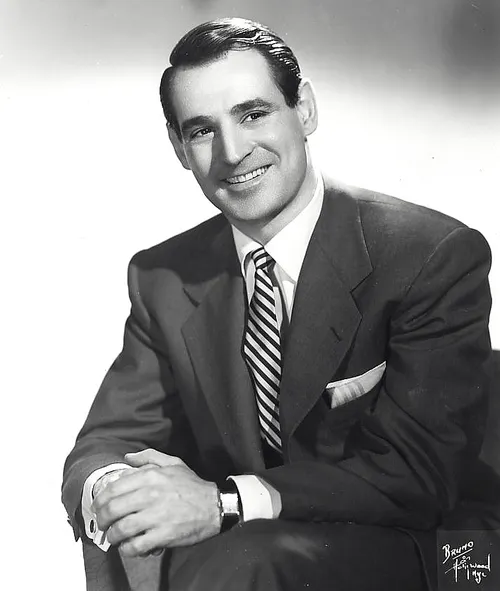
Ray Anthony was not some footnote in the big band scrapbook. He was the real article — a sharp-suited, brass-blasting survivor from the era when bandleaders led bands, musicians had chops, and the American public still knew how to dance.
Born Raymond Antonini in 1922, he came up through Cleveland after learning trumpet from his father and playing in the family orchestra, which is about as old-school a launch pad as you can get.
Before most men had learned how to hold a job, Anthony had landed inside the Glenn Miller Orchestra, one of the most important bands in American music. He joined Miller in 1940 as a teenager, picked up the discipline and polish of a first-rate swing operation, and helped absorb the kind of stagecraft that later made him far more than just another trumpet player in a crowded field.
Then came war, Navy service, and the usual national interruption that reshuffled an entire generation. But Anthony came back, formed the Ray Anthony Orchestra, and did what a lot of postwar musicians could not: he stayed relevant.
He turned out hits like “The Bunny Hop” and “Hokey Pokey,” scored big with the “Dragnet” theme, and later landed another major success with “Peter Gunn.” That is not nostalgia talking — that is commercial survival with a horn section.
What made Ray Anthony different was that he understood both the business and the music. He did not merely preserve swing under museum glass. He pushed it into television, film, pop culture, and the postwar entertainment pipeline. His orchestra showed up on screen, he worked in television, and he carried himself with the kind of polished Hollywood confidence that let him move beyond the bandstand without losing his musical identity.
In plain English, Ray Anthony was one of the men who kept big band music alive after lesser minds had already written the funeral. He proved that brass, rhythm, and presentation still mattered. He was a bridge from the swing era into modern entertainment, and he did it with discipline, style, and enough horsepower to leave a mark that lasted for decades.