Videos:
https://www.youtube.com/watch?v=2EdLasOrG6c
https://www.youtube.com/watch?v=a-C9pUGszsw
https://www.youtube.com/watch?v=SrGSt5eDt9o
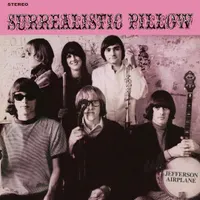
Released in 1967 on Surrealistic Pillow, “Somebody to Love” became one of Jefferson Airplane’s signature songs and a defining moment for Grace Slick as a commanding new voice in rock. Written by Slick’s brother-in-law, Darby Slick, and first recorded by her earlier band, The Great Society, the song took on sharper urgency and power when re-recorded by Jefferson Airplane.
Unlike many psychedelic anthems of the era, “Somebody to Love” is not abstract or dreamy. It is blunt, confrontational, and emotionally direct. The song flips the language of romance into a warning, suggesting that love is not a given but a necessity—and that isolation and emotional dishonesty come at a cost. This directness helped it cut through the haze of late‑1960s idealism.
Grace Slick’s vocal performance is central to the song’s Impact. Her delivery is fierce, controlled, and unapologetic, projecting strength rather than vulnerability. At a time when female rock singers were often expected to sound soft or ornamental, Slick’s voice conveyed authority and defiance, reinforcing the song’s message about emotional truth and self-respect.
Commercially, “Somebody to Love” was Jefferson Airplane’s first Top 10 hit and helped establish the band as a major force in the San Francisco counterculture scene. Culturally, it endures because it speaks not only to the longing for connection, but to the demand for authenticity—making it as relevant in moments of personal or social disillusionment as it was in 1967.
Together with “White Rabbit,” the song cemented Grace Slick’s role as one of the most influential and distinctive voices of the psychedelic era, blending raw emotion with intellectual edge and fearless delivery.
The lyrics of “Somebody to Love” were inspired primarily by Darby Slick’s personal disillusionment with idealized “free love” and emotional emptiness, rather than by psychedelic imagery or political protest.
What inspired the lyrics of “Somebody to Love”
1. A reaction against hollow idealism
Darby Slick wrote the song in 1965 while he was part of the San Francisco band The Great Society, during the early rise of the counterculture scene. While “free love” was widely celebrated, Slick saw its darker side: jealousy, loneliness, emotional instability, and a lack of commitment. The song reflects on the frustration with superficial connections and argues that love is not optional but essential for emotional survival.
2. Personal breakup and emotional clarity
Slick finished the song following a romantic breakup, which sharpened its urgent tone. He has explained that the lyrics were meant to emphasize giving love rather than merely wanting it, a deliberate pushback against romantic clichés and passive longing.
3. Disillusionment with false “truths.”
The opening line—“When the truth is found to be lies / And all the joy within you dies”—captures a broader sense of betrayal and emotional collapse. While listeners later associated these lyrics with social upheaval and political mistrust, Slick originally meant them on a personal and interpersonal level, describing what happens when emotional honesty disappears from relationships.
4. Transformation through Grace Slick’s delivery
When Grace Slick brought the song to Jefferson Airplane in 1966, its meaning intensified. Her forceful, accusatory vocal delivery reframed the lyrics as a warning rather than a plea, turning a personal statement into a generational anthem about isolation and authenticity in a chaotic world.