Videos:
https://www.youtube.com/watch?v=32Oc2d_3yEk
Some songs do not arrive—they announce themselves. The Eagles’ “Take It Easy,” released on 1 May 1972, was the band’s first single and the opening shot from their debut album, which is about as subtle as kicking the saloon doors open and telling the room the professionals have arrived.
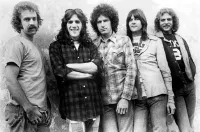
It climbed to No. 12 on the Billboard Hot 100, and from that point forward, the Eagles were no longer just another California band with good hair and acoustic guitars—they were a commercial force with a road map.
What makes the song matter is not just the hook. It is the posture. “Take It Easy” sounds relaxed, but do not confuse relaxed with weak. That is a category error made by people who mistake control for softness. The record has motion, confidence, and a clean, unforced sense of purpose. It helped define the Eagles’ early country-rock identity and became one of the group’s signature songs, later recognized by the Rock and Roll Hall of Fame as one of the “500 Songs that Shaped Rock and Roll.” This recognition highlights its lasting influence on music History, making it more than just a hit.
The backstory only sharpens the edge. Jackson Browne started writing the song in 1971 but could not finish it. Glenn Frey, Browne’s neighbor in Echo Park, heard the unfinished piece, stepped in, helped complete the crucial second verse, and turned an excellent fragment into a record that could carry a band introduction. Browne later recorded his own version for Everyman in 1973, but the Eagles got there first, with enough timing and instinct to make the song theirs in the public mind.
And that is the lesson: great bands do not just write songs—they recognize them. Plenty of musicians can hear something unfinished and mumble polite encouragement. The Eagles heard “Take It Easy” and knew they were staring at their front door. Frey himself saw it as the public’s first real image of the band, the beginning of the Southwest-road-country-rock mythology that would become part of the Eagles’ brand for the next several decades. Their ability to identify and embrace this song shows their sharp musical instinct, a trait that sets them apart from many modern acts that rely on external input.
Musically, the record is a masterclass in making something effortless without making it disposable. It is melodic, yes, but it is not flimsy. It is easygoing, yes, but it is not asleep. That is a harder trick than most people realize. Anybody can make something lazy and call it mellow. Far fewer can make something disciplined feel natural. “Take It Easy” has that balance, which is why it still sounds like the beginning of something important instead of a period piece trapped in amber.
And that is the lesson: the song’s cultural footprint, like the Winslow, Arizona image, can inspire a sense of pride and wonder in the audience, showing how music can shape places and stories.