Introduction
Ever heard the phrase “The fox guarding the hen house”? It’s a vivid warning against putting someone in charge of something they’re likely to exploit. This idiom isn’t just colorful—it’s a timeless cautionary tale about trust, oversight, and the dangers of unchecked power.
Rephrasing the phrase to highlight its relevance and see its importance in governance and accountability.
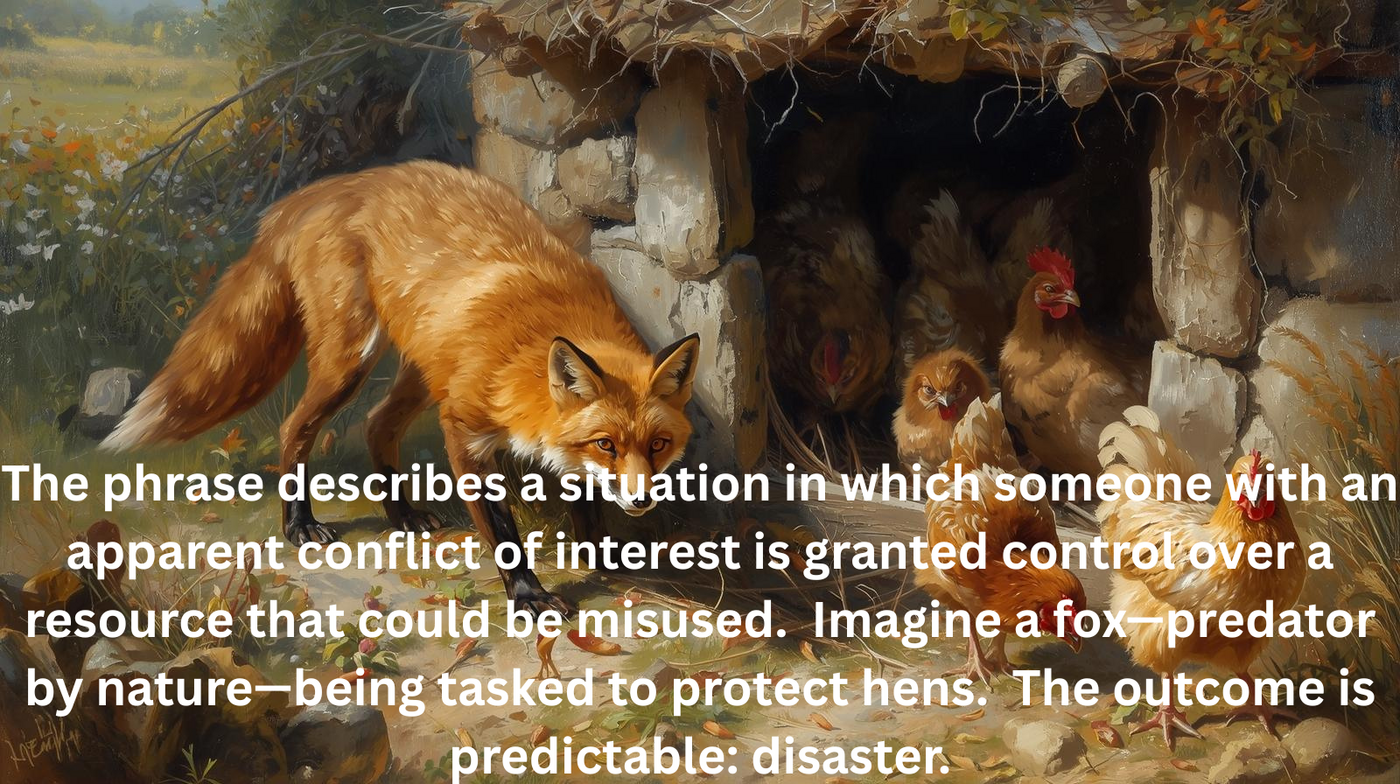
The phrase describes a situation in which someone with an apparent conflict of interest is granted control over a resource that could be misused. Imagine a fox—predator by nature—being tasked to protect hens. The outcome is predictable: disaster.
Connecting the idiom to contemporary oversight challenges underscores its continued relevance and keeps readers engaged with current issues.
Origins of the Phrase
The idiom traces back to European fables and proverbs, in which foxes symbolized cunning and deceit. Farmers knew that letting a fox near a hen house was asking for trouble. Over time, this metaphor evolved into a warning about poor oversight and misplaced trust—a principle that applies far beyond the farmyard.
Modern-Day Examples
This idiom shows up everywhere in today’s world:
- Corporate Governance: Appointing a CEO to lead an audit committee reviewing their own decisions.
- Politics: Regulators with deep ties to the industries they’re supposed to police.
- Cybersecurity: Hiring a hacker to secure your network without proper checks.
Each example underscores the same principle: unchecked power invites abuse.
Why It Still Resonates
In an era of complex systems and blurred accountability, this idiom underscores the vital importance of trust. When trust is genuine, it fosters a sense of shared responsibility and respect, which is essential for maintaining integrity. Oversight isn’t optional—it’s a cornerstone of effective governance. When temptation outweighs trust, the hens don’t stand a chance.
Practical Lessons
- Separate Oversight from Operations: Avoid conflicts of interest by creating independent review structures.
- Transparency Builds Trust: Make processes visible to reduce opportunities for exploitation.
- Question Incentives: If someone benefits from failure, rethink their role.
Takeaway
“Putting a fox in charge of hens is like hiring a hacker to secure your network—temptation outweighs trust.”
Conclusion:
The idiom “The fox guarding the hen house” isn’t just a quaint saying—it’s a warning that echoes through boardrooms, government offices, and even our personal lives. Whenever we assign responsibility without considering incentives, we invite risk.
Trust is vital, but blind trust is dangerous. Build systems that separate oversight from self-interest, and you’ll protect yourself more than just hens—you’ll safeguard integrity.
“Power tends to corrupt, and absolute power corrupts absolutely.” – Lord Acton.
This famous quote pairs perfectly with the idiom, reminding us that unchecked authority is a recipe for disaster.
What do you think? Have you seen real-world examples of “foxes guarding hen houses” in business or politics? Share your thoughts in the comments below, and if this article resonated with you, pass it along to someone who values accountability.