Summary
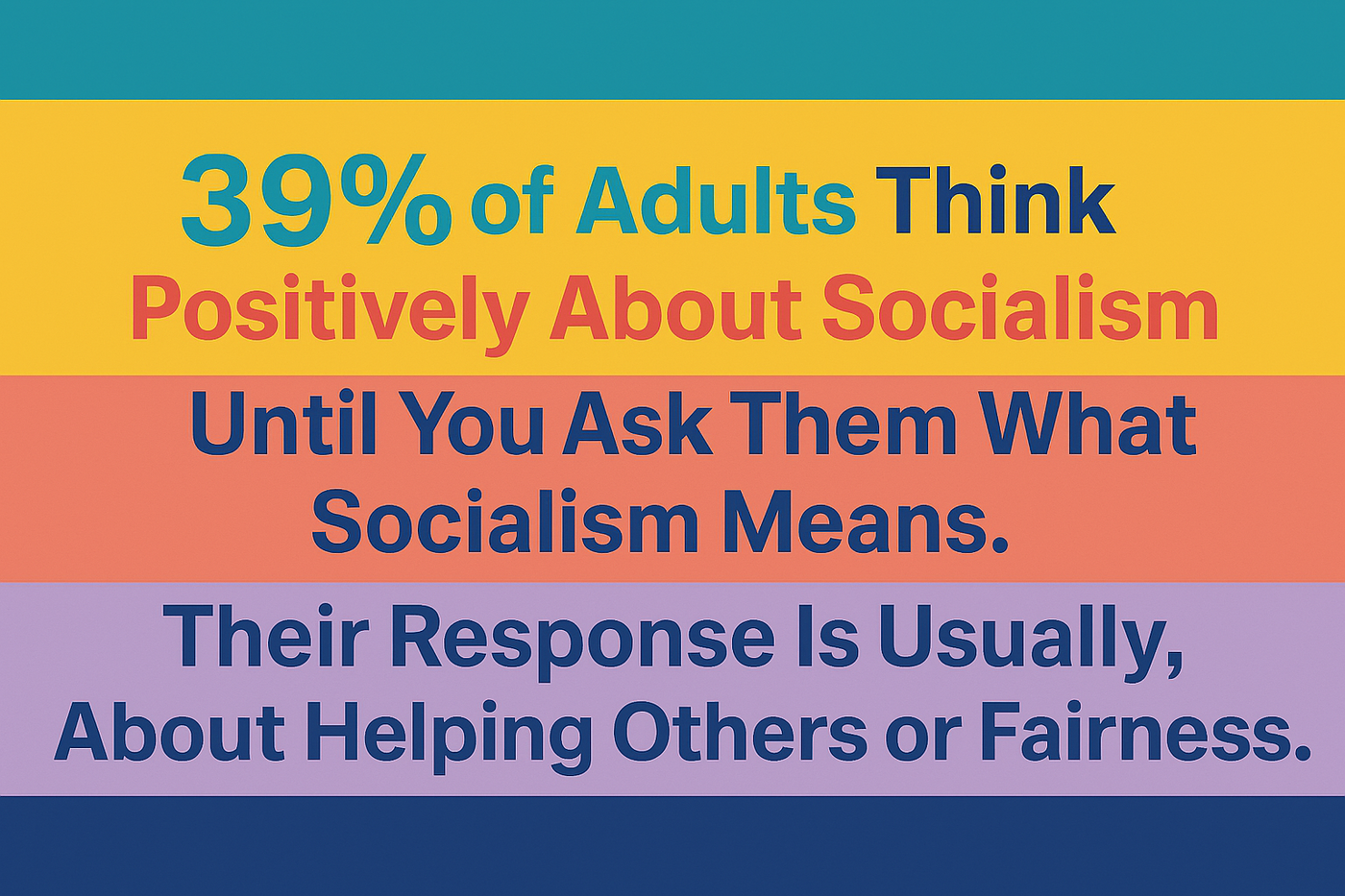
The question arises: Do they know what socialism is about, and nine say no.
Here’s some context:
-
What socialism means (in theory):
Socialism is an economic and political system in which the means of production (factories, land, and resources) are collectively owned or regulated—often by the state or cooperatives—rather than privately. The goal is to reduce inequality and provide universal access to essential goods and services.
-
Why does the confusion exist:
In the U.S., “socialism” is often conflated with social programs (like Medicare or Social Security) rather than complete state ownership of industries. So, when people say they favor socialism, they might really mean they support a stronger social safety net, rather than abolishing private property.
Survey data:
Pew Research and Gallup polls have shown that favorable views of socialism hover around 40–50%, especially among younger Americans. However, when asked to show the latest polling data on socialism.
Here’s the latest Gallup polling data (August 2025) on Americans’ views of socialism and capitalism:
Overall U.S. Adults
- Capitalism: 54% favorable (down from 60% in 2021 and 61% in 2010)
- Socialism: 39% favorable (up slightly from 36% in 2010)
By Party
- Democrats:
- Socialism: 66% favorable
- Capitalism: 42% favorable (first time below 50%)
- Republicans:
- Capitalism: 74% favorable
- Socialism: 14% favorable
- Independents:
- Capitalism: 51% favorable
- Socialism: ~39% favorable
Age Trends
- Younger Americans (18–34):
- Socialism: 46% favorable
- Capitalism: declining sharply among Democrats under 50 (only 31% favorable), the postmillennial
Key Takeaways
- Capitalism’s popularity is at its lowest point in 15 years.
- Socialism is gaining traction among Democrats and younger voters, while remaining unpopular with Republicans.
- The partisan gap is widening. Democrats now prefer socialism over capitalism by a wide margin (66% vs. 42%).