Introduction
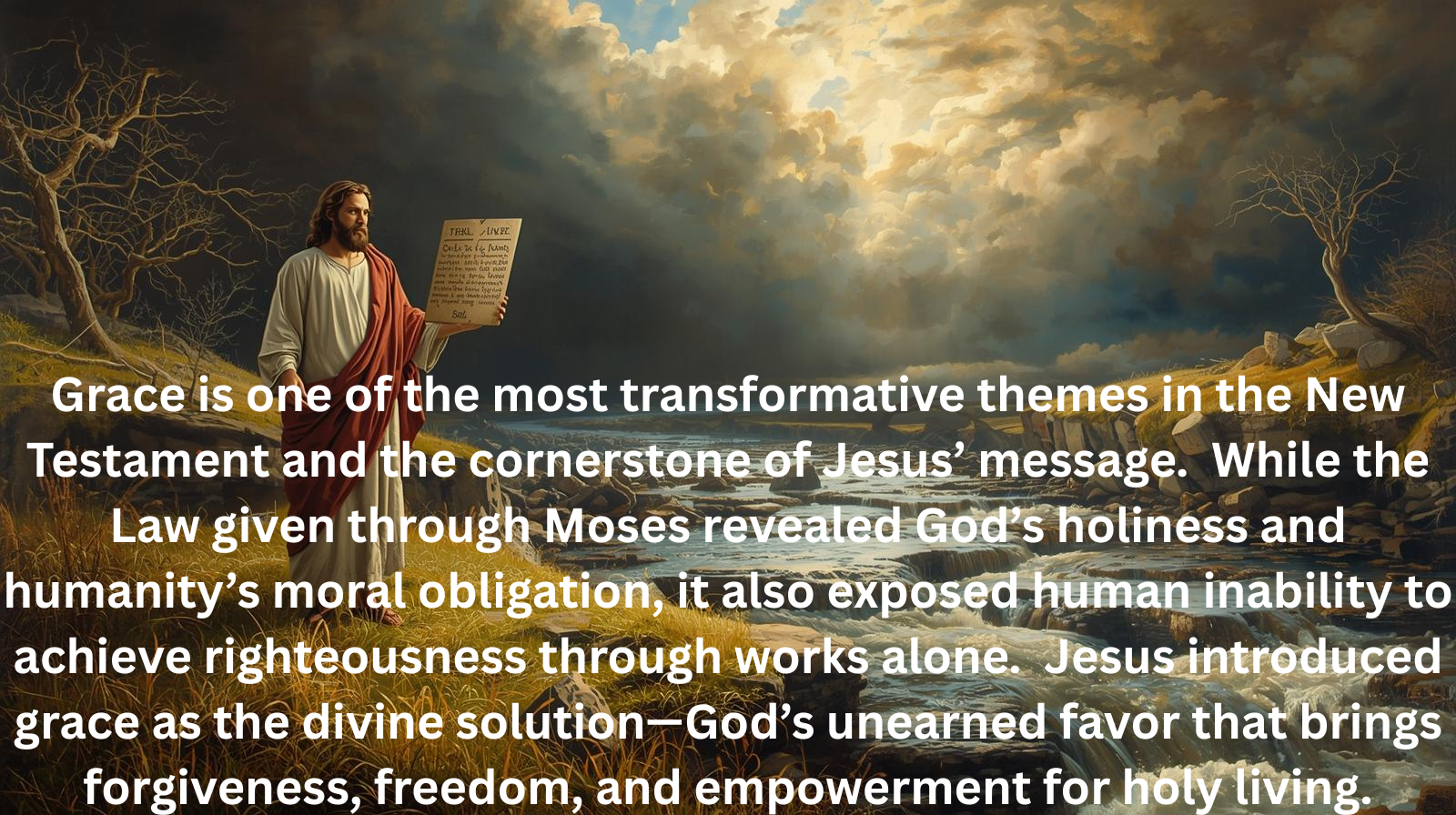
Grace is one of the most transformative themes in the New Testament and the cornerstone of Jesus’ message. Recognizing it as an unearned gift can foster humility and gratitude, encouraging believers to view their lives through God’s generous love rather than through their own efforts.
1. What Is Grace?
Grace is God’s undeserved favor and love toward humanity. It is not earned by performance or ritual but freely given. In Jesus’ teaching, grace is both a gift and a power:
- Gift: Salvation offered without merit (Ephesians 2:8–9).
- Power: The enabling presence of God that transforms the heart and empowers obedience (Romans 6:14).
2. Grace in Contrast to Law
- Law: “Do this and live.” Blessings depended on obedience; curses followed disobedience (Deuteronomy 28).
- Grace: “It is finished.” Jesus’ perfect obedience and sacrificial death secure righteousness for believers (John 19:30).
The Law served as a tutor pointing to Christ (Galatians 3:24). Grace does not nullify the Law’s moral vision; it fulfills it by writing God’s will on the heart through the Spirit (Jeremiah 31:33; Romans 8:3–4).
3. How Jesus Taught Grace
a) Invitation to Rest
“Come to me, all who labor and are heavy laden, and I will give you rest” (Matthew 11:28).
Jesus contrasts the crushing burden of legalism with the light yoke of grace—relationship over ritual.
b) Forgiveness Without Price
In stories such as the Prodigal Son (Luke 15) and the woman caught in adultery (John 8), Jesus demonstrates grace as unconditional forgiveness that restores dignity and calls for new life.
c) Heart Transformation
In the Sermon on the Mount, Jesus moves beyond external compliance to internal purity—anger as murder, lust as adultery (Matthew 5). Grace empowers this deeper righteousness by changing desires, not just behaviors.
4. Grace and the New Covenant
Through His death and resurrection, Jesus inaugurated a covenant of grace:
- Justification: Declared righteous by faith, not works (Romans 3:24).
- Sanctification: Empowered by the Spirit to live out love and holiness (Galatians 5:22–23).
- Access: Direct relationship with God without priestly intermediaries (Hebrews 4:16).
5. Practical Implications Today
- Freedom from Performance: Our worth is not based on flawless obedience but on Christ’s finished work.
- Empowered Living: Grace enables generosity, forgiveness, and moral integrity—not as duty but as gratitude.
- Hope for the Broken: Grace meets us in failure and offers restoration, not condemnation.
Grace profoundly shapes daily life by altering both how we see ourselves and how we treat others.
Here are the key ways grace impacts everyday living:
1. Freedom from Performance Pressure
Grace means your worth is not based on flawless behavior or achievements, which helps you live free from fear of failure and judgment, encouraging practical forgiveness and humility in daily interactions.
When you experience grace, you extend it. Daily life involves conflicts and errors; grace empowers one to forgive others as one has been forgiven (Matthew 6:14-15). This practice brings peace and reassurance, fostering healthier relationships and reducing bitterness.
When you experience grace, you extend it. Daily life involves conflicts and mistakes—grace empowers you to forgive others as you have been forgiven (Matthew 6:14–15). This creates healthier relationships and reduces bitterness.
3. Humility and Gratitude
Grace reminds you that everything good is a gift, not a personal accomplishment. This fosters humility and gratitude, shaping one’s attitude at work, at home, and in the community.
4. Generosity and Service
Because grace is unearned, it inspires generosity—sharing time, resources, and compassion without expecting repayment. It shifts motives from obligation to love.
5. Resilience in Failure
Grace means failure is not final. When you stumble, you can start again without condemnation (Romans 8:1). This builds resilience and hope in the face of daily challenges.
6. Motivation for Holiness
Grace does not lead to laziness; it empowers obedience. You live morally not to earn favor but because you already have it. Love becomes the driving force behind choices.
7. Peace and Joy
Grace removes the burden of self-justification. This brings inner peace and joy, even amid stress or uncertainty, because your identity rests in God’s acceptance.
Real-life examples of grace in action that illustrate how it works practically:
1. Forgiving a Debt
Imagine a friend borrows $500 and cannot repay; instead of demanding payment, you cancel the debt and reaffirm your friendship, exemplifying grace in restoring relationships
2. Responding to an Offense
A coworker speaks harshly about you behind your back. When you learn of it, instead of retaliating or holding a grudge, you choose to forgive and treat them kindly. Grace breaks the cycle of revenge.
3. Helping Without Expectation
You see a neighbor struggling to pay for groceries. You quietly cover the cost without expecting thanks or repayment. Grace gives freely because it reflects God’s generosity.
4. Second Chances
An employee makes a costly mistake. Instead of firing them immediately, you offer guidance and another opportunity to improve. Grace sees potential beyond failure.
5. Family Conflicts
A family Member hurts you deeply. Grace means choosing reconciliation over bitterness—inviting them back into a relationship even when they do not “deserve” it.
6. Everyday Courtesy
Grace shows up in small acts: letting someone cut in line, listening patiently when someone is rude, or offering encouragement when others criticize.
7. Spiritual Example
In the Christian faith, grace is exemplified by Jesus’ forgiveness of Peter after Peter’s denial (John 21). Peter did not earn restoration; Jesus gave it freely and entrusted him with leadership.
Living by Grace: 7 Daily Practices
Grace is not just a theological concept—it is a lifestyle that transforms how we think, act, and relate to others.
Here is how to practice grace every day:
1. Start with Gratitude
- Action: Begin your day by thanking God for His unearned favor and blessings.
- Why: Gratitude shifts your mindset from striving to resting in what is already given.
2. Release Perfectionism
- Action: When you make mistakes, remind yourself: “I am accepted by grace, not performance.”
- Why: This frees you from anxiety and self-condemnation.
3. Forgive Quickly
- Action: When someone wrongs you, choose forgiveness—even if they do not apologize.
- Why: Grace received becomes grace extended (Matthew 6:14–15).
4. Speak Words of Life
- Action: Use encouraging, truthful words instead of criticism or gossip.
- Why: Grace builds up rather than tears down (Ephesians 4:29).
5. Give Without Expectation
- Action: Offer assistance, time, or resources without expecting repayment or recognition.
- Why: Grace is generous because it reflects God’s heart.
6. Practice Empathy
- Action: Before judging, ask: “What might this person be going through?”
- Why: Grace sees people through the lens of compassion, not condemnation.
7. Rest in God’s Presence
- Action: Take time daily for prayer or reflection, not as a duty but as a delight.
- Why: Grace invites a relationship, not a ritual. It is about abiding rather than earning.
Closing: Grace as the Heartbeat of the Gospel
Grace is not a softening of God’s standards; it is the power to meet them through Christ. Where the Law says, “Do,” grace says, “Done.” In Jesus, grace is not an abstract concept but a living reality—God’s favor poured out, transforming hearts and shaping communities of love.
In a world obsessed with merit and achievement, grace remains radical: unearned, unconditional, and unstoppable. It is the invitation to rest, the assurance of forgiveness, and the empowerment to live a life that reflects God’s character—not by striving, but by abiding in Christ.
Grace changes everything. It turns pressure into peace, bitterness into forgiveness, and fear into freedom. Practicing grace daily means living from acceptance, not for acceptance—and letting that reality shape every interaction.