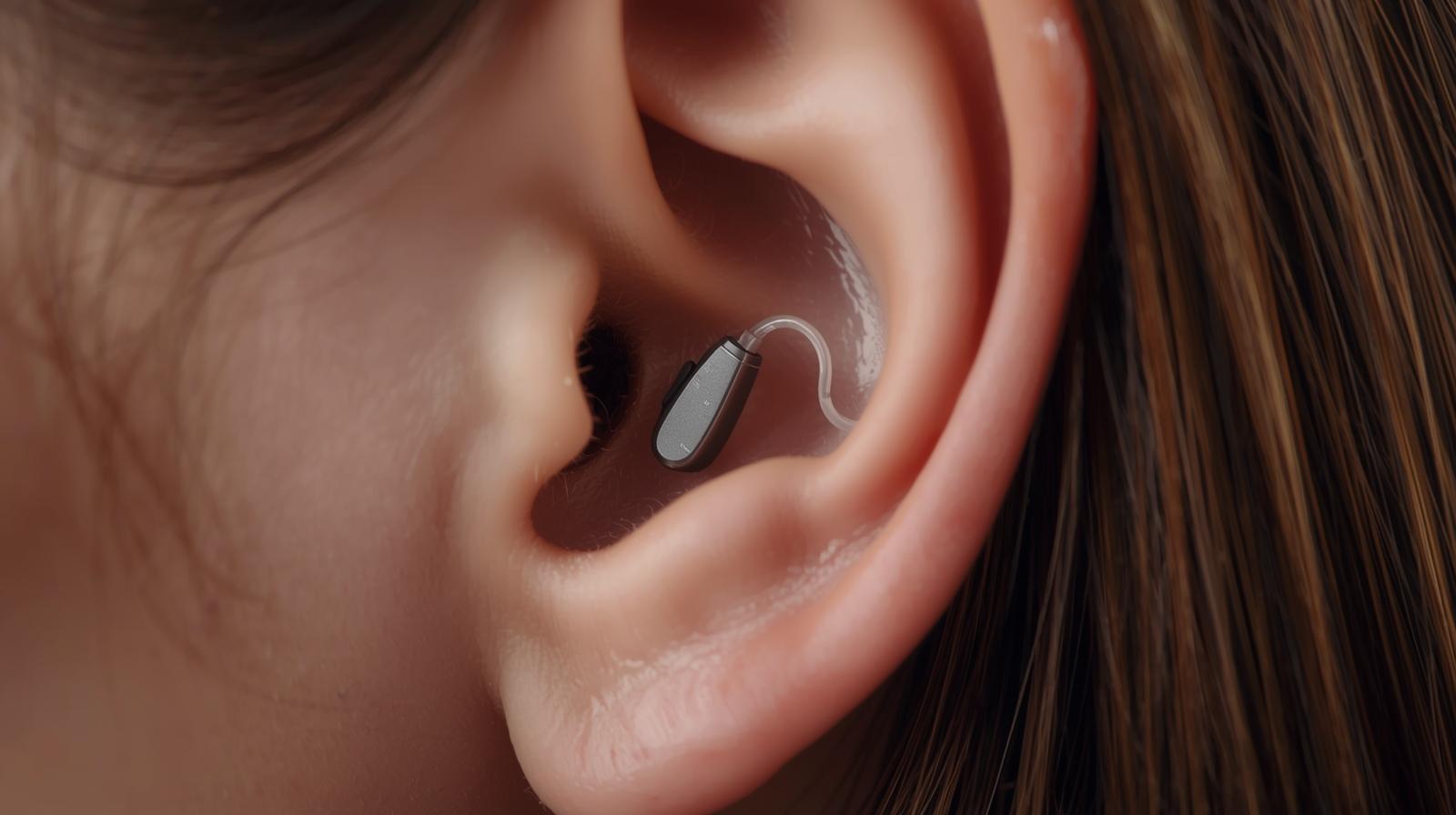
1. Phonak Lyric (Extended‑Wear)
Smallest & most invisible overall
- Placed deep in the ear canal, about 4 mm from the eardrum
- 100% invisible—even up close
- Worn 24/7 for months (sleeping, showering, exercising)
- No charging or battery changes (subscription model)
✅ Best for: People who want absolute invisibility and zero daily handling
⚠️ Limits: Subscription cost, clinic-only fitting, not for all ear canals
2 Starkey Signature Series IIC
Smallest removable hearing aid
- Among the smallest Invisible‑In‑Canal (IIC) devices ever made
- Custom-molded, sits deep in the ear canal
- Excellent sound for mild–moderate hearing loss
✅ Best for: Maximum discretion without subscription
⚠️ Limits: No Bluetooth streaming, small batteries
. Phonak Virto Titanium (IIC / CIC)
Strongest tiny hearing aid
- Titanium shell allows thinner walls → smaller size
- More durable than acrylic IICs
- Very discreet, though not always fully invisible
✅ Best for: Active users who want tiny + tough
⚠️ Limits: Usually no Bluetooth in IIC size
🏆 Best Hearing Aids Overall (Performance + Tech)
If sound quality, speech clarity, and technology matter more than absolute size:
1. Phonak Infinio (RIC or Custom)
Best overall hearing aid (2025–2026)
- Industry‑leading speech‑in‑noise performance
- Universal Bluetooth (iPhone, Android, TVs)
- AI‑driven AutoSense OS
✅ Best for: Most users, especially in noisy environments
2. Oticon Intent
Best for natural sound & conversation
- Brain‑focused sound processing
- Excellent for social and group settings
✅ Best for: Speech understanding without “processed” sound
3 Jabra Enhance Select 700 (OTC)
Best over‑the‑counter option
- Strong audiologist backing
- App‑based tuning and remote care
- Much lower cost than prescription aids
✅ Best for: Mild–moderate loss, budget‑conscious users
🔍 Quick Recommendation Summary
|
If you want… |
Best Choice |
|
· Absolute invisibility |
Phonak Lyric |
|
· Smallest removable aid |
Starkey Signature IIC |
|
· Tiny + durable |
Phonak Virto Titanium |
|
· Best sound overall |
Phonak Infinio |
|
· Best OTC value |
Jabra Enhance 700 |
💎 Tiny / Invisible Hearing Aids — Price Ranges
Phonak Lyric (100% Invisible, Extended‑Wear)
- $3,000 – $5,000 per year (pair)
- Sold only as a subscription
- Includes unlimited replacements, fittings, and follow‑ups for the year
✅ No batteries, no charging, no removal
⚠️ Ongoing annual cost, clinic‑only availability
Starkey Signature Series IIC (Invisible‑In‑Canal)
-
$2,250 – $4,500 per pair
- One‑time purchase (plus optional service plans)
✅ Among the smallest removable hearing aids in the world
⚠️ No Bluetooth streaming due to size
Phonak Virto Titanium (IIC / CIC)
-
$2,400 – $6,000 per pair
- Titanium shell allowsa thinner, smaller build
✅ Very discreet + extremely durable
⚠️ Bluetooth is usually not available in true IIC size
🏆 Best Overall Hearing Aids — Price Ranges
Phonak Infinio (RIC or Custom)
-
$3,000 – $7,000 per pair
- Depends heavily on technology tier (Advanced vs Premium)
✅ Best‑in‑class speech clarity & universal Bluetooth
Oticon Intent
-
$3,000 – $6,500 per pair
✅ Exceptional speech‑in‑noise performance
Jabra Enhance Select 700 (OTC)
-
$1,600 – $2,000 per pair
- Remote audiology included (no in‑office visits required)
✅ Best OTC value for mild–moderate loss
📊 Quick Price Comparison
|
Model |
Typical Price (Pair) |
|
Phonak Lyric |
$3,000–$5,000 per year |
|
Starkey Signature IIC |
$2,250–$4,500 |
|
Phonak Virto Titanium |
$2,400–$6,000 |
|
Phonak Infinio |
$3,000–$7,000 |
|
Oticon Intent |
$3,000–$6,500 |
|
Jabra Enhance 700 (OTC) |
$1,600–$2,000 |
💡 Important Cost Insight (Most People Miss This)
-
Invisible = fewer features (often no Bluetooth)
-
Sound quality ≠ size — larger RIC aids usually outperform tiny IICs
-
Provider skill matters more than brand
-
Insurance rarely covers hearing aids, but HSA/FSA usually applies
✅ Best Value Hearing Aid Under $4,000 (2025–early 2026)
Short answer:
Phonak Virto Titanium (CIC or IIC) offers the best overall value under $4k for Premium people who want Premium sound + discretion without paying flagship prices.
Below is a clear, evidence‑based breakdown so you can see why.
🥇 #1 Best Value Under $4k
Phonak Virto Titanium (CIC / IIC)
Typical price: $2,400 – $3,800 per pair, depending on tech tier and provider
Why it wins on value
- Titanium shell = smaller & stronger than acrylic
→ allows thinner walls and deeper canal placement without fragility - Near‑invisible (often invisible in IIC form)
- Excellent speech clarity from Phonak’s AutoSense OS
- Durability advantage over other tiny aids (sweat, drops, moisture)
- One‑time purchase (no subscription)
Trade‑offs
- Bluetooth streaming is usually not available in true IIC size
- Small disposable batteries (3–6 days)
✅ BestPremium people who want Premium sound, tiny size, durability, and cost control
🥈 #2 Best Invisible Value (Smallest Possible)
Starkey Signature Series IIC
Typical price: $2,250 – $4,000 per pair
Strengths
- Among the smallest removable hearing aids in the world
- Very natural sound for mild–moderate loss
- Often priced lower than Phonak titanium
Limitations
- No Bluetooth
- Slightly less robust than titanium
- Sound processing is not quite as strong in noisy places as Phonak
✅ Best for:
People who prioritize maximum invisibility at the lowest premium price
🥉 Best Tech Value (OTC)
Jabra Enhance Select 700
Typical price: $1,600 – $2,000 per pair
Strengths
- Outstanding price‑to‑performance ratio
- Bluetooth streaming
- Remote audiology included
Limitations
- Not invisible (RIC style)
- Mild–moderate loss only
✅ Best for:
Tech‑savvy users who care more about performance per dollar than size
❌ Why NOT Phonak Lyric Under $4k
- Costs $3,000–$5,000 every year
- Over 5 years → $15k–$25k total cost
Lyric is amazing—but not a value Play.
📊 Value Comparison (Under $4k)
|
Model |
Size |
Sound Quality |
Durability |
Long‑Term Cost |
|
Phonak Virto Titanium |
Tiny / near‑invisible |
⭐⭐⭐⭐½ |
⭐⭐⭐⭐⭐ |
✅ Best |
|
Starkey Signature IIC |
Smallest |
⭐⭐⭐⭐ |
⭐⭐⭐⭐ |
✅ |
|
Jabra Enhance 700 |
Small RIC |
⭐⭐⭐⭐½ |
⭐⭐⭐⭐ |
✅✅ Best Budget |
|
Phonak Lyric |
Invisible |
⭐⭐⭐⭐ |
⭐⭐⭐⭐ |
❌ Expensive |
✅ Final Recommendation
If you want the best value under $4k and you care about both sound quality and discretion:
Choose: Phonak Virto Titanium (Advanced tier, CIC or IIC)
The 80/20 Rule (Know This First)
Most clinics mark up devices 30–100% to bundle:
- exams
- fittings
- follow‑ups
- warranty handling
Your goal is to unbundle hardware from services and force price transparency.
Step 1 — Ask for the “Device‑Only” Price (Script Included)
Many clinics have a device‑only price but won’t volunteer it.
Say this exactly:
“I’d like the unbundled device‑only price for the hearing aids, and a separate line item for professional services.”
✅ If they can’t or won’t unbundle → that’s a markup red flag
Step 2 — Demand a Line‑Item Quote (Non‑Negotiable)
You want a written quote that separates:
- Hearing aid model + tech level
- Professional services (fitting, follow‑ups)
- Warranty/loss & damage
- Accessories
If it’s a single lump number, you’re paying a premium.
Step 3 — Use Tele‑Audiology to Cap Hardware Cost
This is the biggest markup killer.
What works well:
- Buy the hardware online from a licensed seller
- Pay a local audiologist only for fitting
Typical cost split (realistic):
- Hardware (Virto Titanium Advanced): $2,400–$3,200
- Local fitting package: $300–$700
- ✅ Total stays under $4k
Clinics hate this—but it works.
Step 4 — Shop the Same Model at 3 Places (Minimum)
Markup varies wildly for the same device.
Ask three providers for the same model & tech level:
- Independent audiologist
- ENT‑based clinic
- Tele‑audiology retailer
You’ll often see $1,500–$2,500 spread for identical hardware.
Step 5 — Avoid These Markup Traps 🚩
If you hear any of the following, pause:
- “We don’t sell devices without services.”
- “You lose warranty if you buy elsewhere” (usually false)
- “This is our special version” (often just rebranded)
- “Premium tier is required” (rarely true)
None of those are technical necessities.
Step 6 — Choose the Right Tech Tier (Huge Savings)
Premium tiers are usually not worth it in tiny IIC/CIC aids.
Value sweet spoPremiumneeded
- d tier (not Premium)
- You save $800–$1,500
- Real‑world speech difference is minimal in small form factors
This alone often keeps you under $4k.
Step 7 — Negotiate Like This (It Works)
Clinics expect negotiation but respond best to specifics.
Say:
“I have quotes for this same model at $X.
If you can match within $300, I’ll proceed today.”
Many will move. Some won’t. That’s fine—walk.
Step 8 — Warranty Without the Markup
You do not need bundled service plans.
Instead:
- Manufacturer warranty (standard)
- Optional third‑party loss/damage coverage
- Pay‑as‑you‑go visits ($75–$150)
This avoids prepaid care you may never use.
Best Low‑Markup Paths (Ranked)
-
Tele‑audiology + local fitting ✅ best value
-
Independent audiologist (unbundled)
-
Costco (if the model fits your needs)