Summary
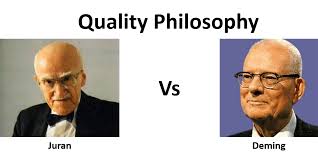
America didn’t ignore W. Edwards Deming and Joseph M. Juran because their ideas were obscure. It ignored them because, after World War II, America was the industrial superpower, and superpowers rarely redesign the engine while they’re winning the race.
While the U.S. accepted “quality,” it often resisted the kind that demanded leadership to overhaul management practices, reflecting a cultural comfort with the status quo that managers may find familiar and respect. To deepen understanding, explain how American cultural values and existing management structures created resistance to Deming and Juran’s philosophies, helping readers grasp why change was slow.
It is my opinion that American manufacturers were fat and sassy, producing mediocre to inferior products, dominated by labor union competence, and virtually no competition. Why change when you rule the entire manufacturing segment? Labor union dominance and mediocracy go hand in hand.
Consumer advocacy and quality control had not yet become pronounced in the American car market, and they made enormous profits in repairing defective products.
The context: a nation that could sell almost anything
In the late 1940s and 1950s, the U.S. had enormous productive capacity, strong domestic demand, and relatively limited global competition from war-damaged rivals. In that environment, most manufacturers could maintain profitability through volume, scale, and market power rather than through the relentless reduction of variation and waste that Deming preached.
Meanwhile, Japan faced the opposite reality: it needed to rebuild and restore credibility, so it actively sought methods to ensure that its products remained reliably competitive. Japan’s quality institutions, such as JUSE, formally invited Deming in 1950 and rapidly established structures (including the Deming Prize, established in 1951) to institutionalize quality improvement within corporate life. Highlight how these initiatives directly transformed Japanese manufacturing practices, demonstrating the tangible Impact of Deming and Juran’s philosophies in Japan’s postwar recovery.
When you’re the default supplier to the world, urgency dies.
1) Victory bred complacency—and complacency hates “transformation.”
Deming wasn’t offering incremental tweaks. He was delivering a management transformation—a new philosophy of leadership, cross-functional cooperation, and process discipline. That’s the kind of message that lands when leaders feel existential pressure. Post-World War II America didn’t—at least not yet.
Britannica summarizes the arc bluntly: Deming’s ideas were embraced in Japan in 1950, but “not until the 1980s” did many American corporations adopt them as global competition intensified.
People change when they must, and Japan’s markets can be the most compelling force driving organizations to adapt, emphasizing the power of market influence on quality improvements for the audience.
2) The U.S. was trapped in the “inspection era” (quality as policing)
A major postwar American habit was treating quality as something you inspect at the end, not something you design into the process. That approach aligns with a mass-production mindset: produce in large quantities, then address defects through inspection, rework, and warranty reserves.
Deming attacked this directly. In his 14 Points, he calls for management to “cease dependence on inspection to achieve quality” and to build quality into the process itself.
If you already have entire departments, career ladders, budgets, and authority built around inspection, Deming’s approach feels less like “help” and more like a reorganization threat. To clarify, discuss how existing American management investments in inspection created organizational inertia, making it difficult for companies to see the value in shifting to process-based quality management, thus connecting to the audience’s understanding of organizational change challenges.
Inspection is a tax you pay when leadership won’t fix the process.
3) Deming’s message threatened the American management religion: quotas, MBO, and “visible numbers.”
Mid-century U.S. management culture leaned heavily on:
- output quotas,
- performance rankings,
- management by objectives (MBO),
- and numerical targets.
Deming challenged the core of American management culture-quotas, MBO, and visible numbers-making managers feel the critique’s importance and the need for change.
That critique wasn’t academic. It struck at the core of how American managers justified their own value: setting targets, demanding compliance, rewarding “winners,” and punishing “losers.” Deming’s underlying claim—most quality problems belong to the system (management)—was an indictment of the management class.
Deming didn’t sell tools. He sold accountability management.
4) Juran was “executive-friendly”… and still got resisted for the same reason
Juran often sounded more boardroom‑compatible than Deming because he framed quality as:
- customer‑defined “fitness for use,”
- executive responsibility,
- and a managed improvement discipline (planning, control, improvement).
In 1954, at JUSE’s invitation, Juran lectured Japanese executives and managers; scholars note these lectures—alongside Deming’s—were seminal to Japan’s quality movement.
So why didn’t Juran’s approach penetrate U.S. industry earlier?
Because leadership’s role is crucial, when a product fails, it’s often due to leadership’s failure to plan, develop capability, align functions, invest in training, or govern suppliers—not worker carelessness. This underscores the importance of leadership responsibility in shaping the audience’s understanding of quality management.
You can delegate inspections. You can’t delegate responsibility.
5) Short-term financial thinking beats long-term capability
Deming’s philosophy requires constancy of purpose—investment in training, supplier development, process redesign, and ongoing learning. His 14 Points begin with that long-term posture: “Create constancy of purpose toward improvement of product and service…”
But postwar American corporate governance increasingly favored short-term optics: quarterly performance, budget cycles, and “results now.” (Deming later criticized this fixation in his management writings—arguing that visible numbers without method and learning lead to waste and decline.)
Juran’s approach also demanded investment—especially in planning and cross-functional improvement—but American firms often treated quality costs as “overhead,” not as a strategic lever.
Wall Street loves visible output; process improvement is invisible—until a competitor makes you look foolish.
6) Adversarial labor relations made “pride of workmanship” harder to operationalize
Deming emphasized “drive out fear” and the removal of barriers to pride of artistry—conditions in which employees can surface problems and improve processes without retaliation.
But many U.S. factories were structured around compliance, discipline, and division between “thinkers” and “doers.” When labor relations are adversarial, workers have less incentive to expose defects and more incentive to protect themselves.
Japan—primarily through later practices such as QC circles and company-wide quality—developed more systematic ways to involve employees in improvement. That ecosystem aligned with Deming’s and Juran’s shared insistence that quality can’t be bolted on; it must be built in.
Fear doesn’t prevent defects; it prevents truth.
7) America’s markets didn’t punish mediocrity—until Japan made reliability a brand
For a time, U.S. manufacturers could “win” with scale even if quality variation was tolerated. However, Japan’s methodical adoption of Deming’s and Juran’s teachings transformed quality into a competitive advantage.
JUSE’s historical account describes Deming’s 1950 courses for executives, managers, and engineers—and how those teachings provided an “impetus” for Japanese quality control, culminating in the creation of the Deming Prize.
Over time, Japanese firms gained a reputation for consistency and reliability, prompting global competitors to enter a quality arms race. Britannica notes that the U.S. came around much later, as competition intensified and companies sought ways to respond.
America didn’t learn quality from textbooks. It was evident from the loss of market share.
8) The “rediscovery” of Deming in America came from embarrassment and urgency
A revealing detail: Deming became widely known in the U.S. only after Japanese competition became impossible to ignore. By 1980, he was prominently featured in the NBC documentary “If Japan can… why can’t we?” and demand for his consulting services surged.
Ford is a classic example of late adoption under pressure. An Arthur D. Little “Viewpoint” article recounts Ford’s early‑1980s crisis. It describes a “major event” as Ford management’s encounter with Deming in early 1981, as the company shifted from “finding and fixing” problems to preventing them through process design.
In other words: Deming didn’t “fail” in America. America failed to listen—until pain made listening rational.
Deming became “brilliant” in America the moment Japan made him necessary.
9) The deeper reason: Deming and Juran both attacked the status hierarchy
Here’s the simplest explanation that ties everything together:
- Deming threatened managers who ruled by targets, rankings, and inspection.
- Juran threatened executives who wanted to delegate quality as a technical detail.
Both men insisted that quality is primarily a leadership and system-design problem—not a worker-motivation problem.
Deming’s 14 Points place responsibility squarely on management: build quality into the process, break down departmental barriers, eliminate numerical quotas, and replace fear with leadership.
Juran’s lectures to Japanese executives (documented and studied in detail) emphasized quality management as an executive discipline—planning and governing quality, not merely measuring defects after the fact.
So the rejection wasn’t intellectual. It was political and cultural: adopting these philosophies meant admitting that leadership practices were causing the defects.
Most organizations don’t fear change. They fear what change implies about who’s been wrong.
What America could have done (and what it can still do)
If you strip away the History, Deming and Juran offer a combined playbook that is still painfully relevant:
· Stop treating quality as inspection. Design capability into the process.
· Make quality a leadership discipline. Plan it, fund it, govern it.
· Replace “numbers without method” with learning. Targets don’t create capability; systems do.
· Build constancy of purpose. Long-term capability outweighs short-term optics.
And if you want the historical moral in one line:
Japan adopted Deming and Juran because it had to compete. America ignored them because it didn’t have to—until it did.