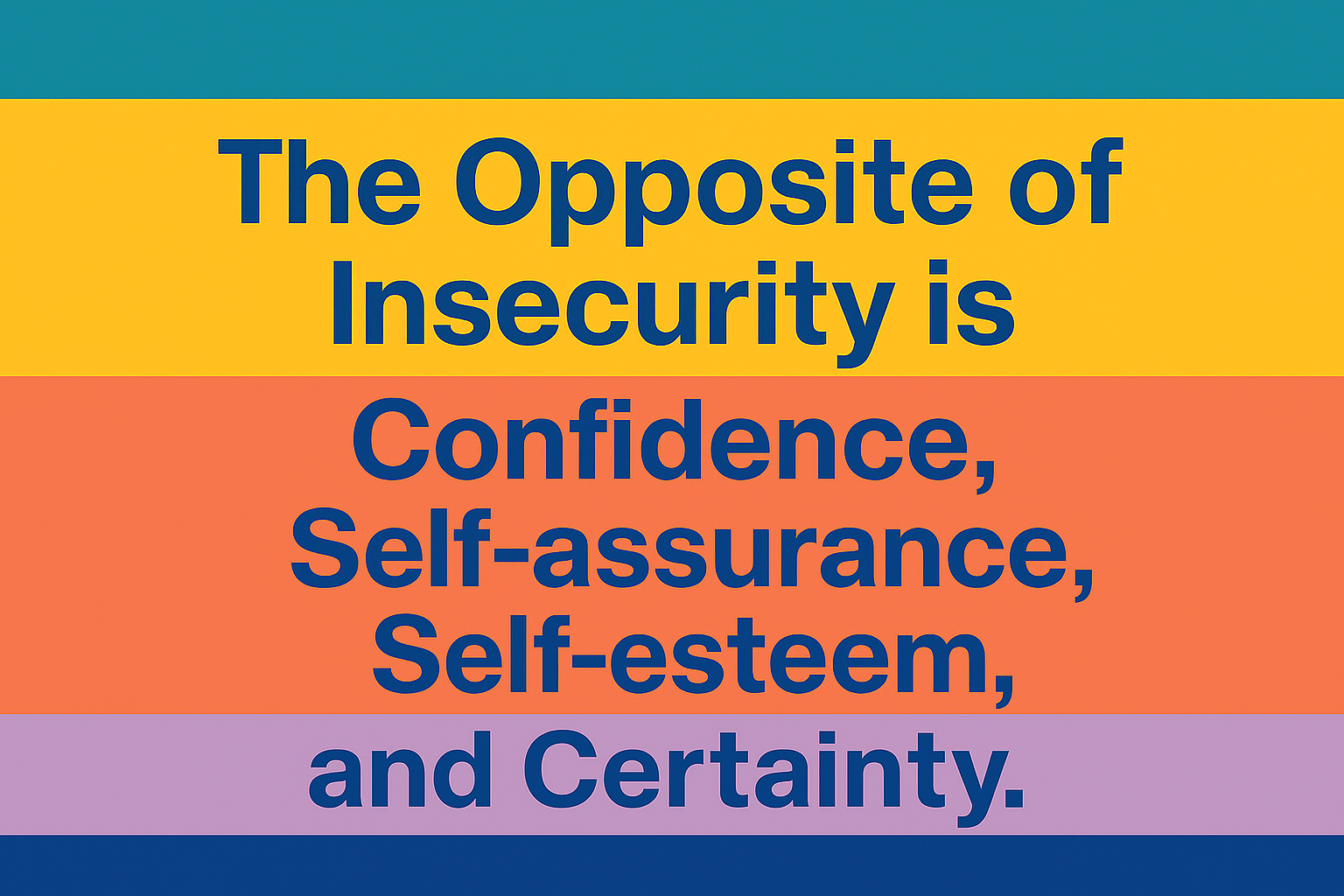
Here are a few related terms that capture the opposite state:
- Confidence – A strong belief in your abilities and worth.
- Self-assurance – Trusting yourself and your decisions.
- Self-esteem – A positive evaluation of your own value.
- Certainty – Feeling secure and sure about yourself or a situation.
Understanding the distinct but interconnected nature of Confidence and self-esteem is a powerful tool in your personal growth arsenal. This knowledge empowers you to navigate your journey with clarity and insight, enabling you to take control of your development.
Here’s the breakdown:
✅ Confidence
- Definition: Belief in your ability to perform tasks or succeed in specific situations.
- Focus: Skills and actions (“I can do this.”).
- Source: Built through experience, practice, and achievement.
- Example: Feeling sure you can give a good presentation because you’ve prepared well.
✅ Self-Esteem
- Definition: Overall sense of self-worth and value as a person.
- Focus: Identity and self-acceptance (“I am worthy regardless of performance.”).
- Source: Internal beliefs, self-perception, and how you treat yourself.
- Example: Feeling good about yourself, even if you make a mistake during the presentation.
Key Difference
- Confidence = “I trust my ability to do something.”
- Self-Esteem = “I value myself as a person.”
It’s crucial to recognize that you can have high Confidence but low self-esteem (e.g., being great at work but still feeling unworthy) or high self-esteem but low Confidence (e.g., loving yourself but being nervous about public speaking). Understanding these nuances is not just important, but also helps you approach your personal growth from a place of empathy and understanding, fostering a kinder relationship with yourself.
Here are five practical strategies that you can easily incorporate into your daily life to build both Confidence and self-esteem. These strategies are not just manageable but also highly effective, putting you in the driver’s seat of your personal development journey.
1. Set and Achieve Small Goals
- Why it works: Completing small, realistic goals builds Confidence in your abilities and reinforces your sense of worth.
- Action: Start with something simple, such as organizing your desk or completing a short task. Celebrate the win.
2. Practice Self-Compassion
- Why it works: Self-esteem grows when you treat yourself with kindness, especially after mistakes.
- Action: When you fail, replace harsh self-talk with: “I’m learning and improving every day.”
3. Develop Competence Through Learning
- Why it works: Confidence comes from skill mastery, and self-esteem improves when you invest in yourself.
- Action: Dedicate 15–30 minutes daily to learning something new (a language, a professional skill, or a hobby).
4. Affirm Your Value Daily
- Why it works: Positive affirmations rewire negative self-beliefs, strengthening both Confidence and self-worth.
- Action: Repeat affirmations like “I am capable and worthy” every morning for 5 minutes.
5. Surround Yourself with Positive Influences
- Why it works: Supportive environments reinforce your strengths and reduce self-doubt.
- Action: Spend time with people who uplift you and limit exposure to toxic or overly critical individuals.
Your 30-Day Combined Confidence & Self-Esteem Plan is ready!
📄 Download the 30-Day Confidence & Self-Esteem Calendar PDF