The Setup
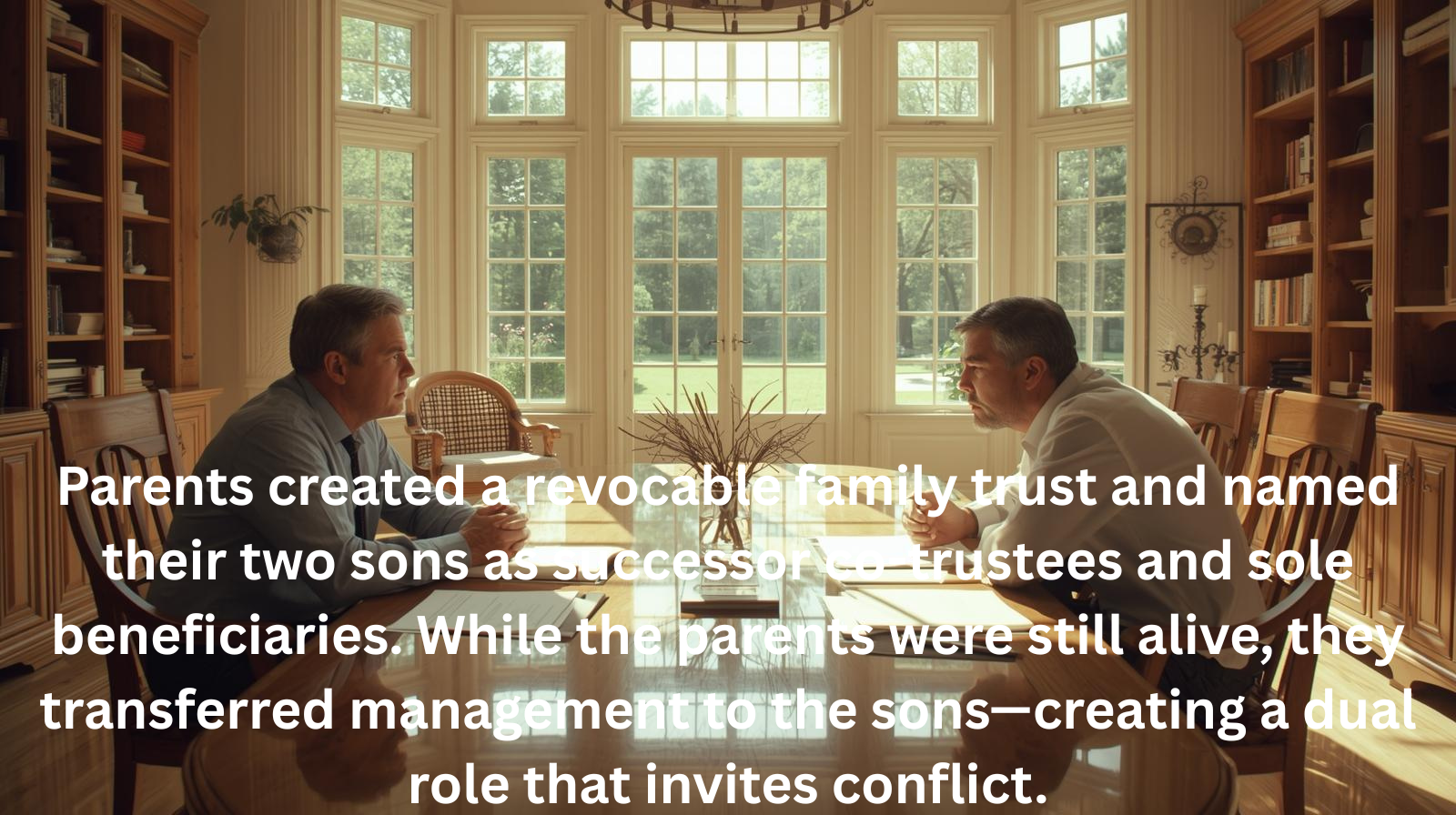
Parents created a revocable family trust and named their two sons as successor co-trustees and sole beneficiaries. While the parents were still alive, they transferred management to the sons—creating a dual role that invites conflict.
The Flashpoint
One son wanted to borrow against trust property, citing language that allowed trustees to “encumber” assets. The other son refused:
- The loan wouldn’t benefit the parents.
- He didn’t need the money.
Result? A hostile standoff fueled by different financial needs and clashing interpretations of fiduciary responsibility.
Real-World Examples of Trust Conflicts
Example 1: The Vacation Home Battle
Two sisters inherited a vacation home through a family trust. One wanted to mortgage the property to fund her business; the other tried to keep it debt-free for family use. The lender required both signatures. The dispute delayed the loan, and the property was eventually sold under court order, thereby destroying family harmony.
Example 2: The “Silent Partner” Problem
A California trust allowed either trustee to encumber property independently. One brother took out a $500,000 loan without informing the other. When payments defaulted, both were liable. The second brother sued for breach of fiduciary duty, and the lender initiated the foreclosure. The trust’s assets—and family relationships—were wiped out.
Example 3: The Business Expansion Disaster
A father’s trust owned a commercial building. After his death, his two sons became co-trustees. One son sought to refinance the property to expand his business; the other opposed the risk of doing so. The dispute escalated into litigation, resulting in $150,000 in legal fees and necessitating a court-supervised sale.
Example 4: The “Loan for Lifestyle” Conflict
In Texas, a trustee-beneficiary borrowed against trust property to fund a luxury lifestyle. When the trust couldn’t meet payment obligations, creditors pursued the property. The family sued the trustee for self-dealing, and the court imposed personal liability—turning a family asset into a legal nightmare.
Example 5: The Multi-State Property Mess
A trust held properties in three states. The co-trustees disagreed on whether to use equity for renovation. Because state laws differed in their definitions of trustee powers, lenders required unanimous consent. The deadlock lasted two years, during which property values declined and rental income dried up.
Why These Conflicts Matter
- Conflict of Interest: Trustees who are also beneficiaries face ethical dilemmas.
- Loan Mechanics: Lenders require both trustees to sign. If one refuses, the deal dies.
- Legal Exposure: Even if the trust allows encumbrance, both trustees share liability for payments and risk losing property.
- Title & Authority: Trustees hold title, but cooperation is non-negotiable.
The Lender’s Role
When a trustee seeks a loan, the lender becomes a gatekeeper. Standard underwriting demands clarity:
- Signed letter of interest
- Both trustees’ signatures
- Agreement on payment responsibility
If the language of trust is vague or the trustees disagree, lenders often withdraw, risking delays and legal complications for all involved.
The Big Question
Is borrowing against family trust property selfish—or strategic?
This scenario isn’t rare. Many families discover too late that trust design without transparent governance creates uncertainty, a problem that legal professionals can help prevent.
Key Takeaways
- A trust that empowers multiple trustees without defining decision rules invites chaos.
- Lenders won’t fund ambiguity.
- Trustees must act in the best interest of the trust, not their personal agendas.
Bottom line: In family trusts, clarity isn’t optional—it’s survival.