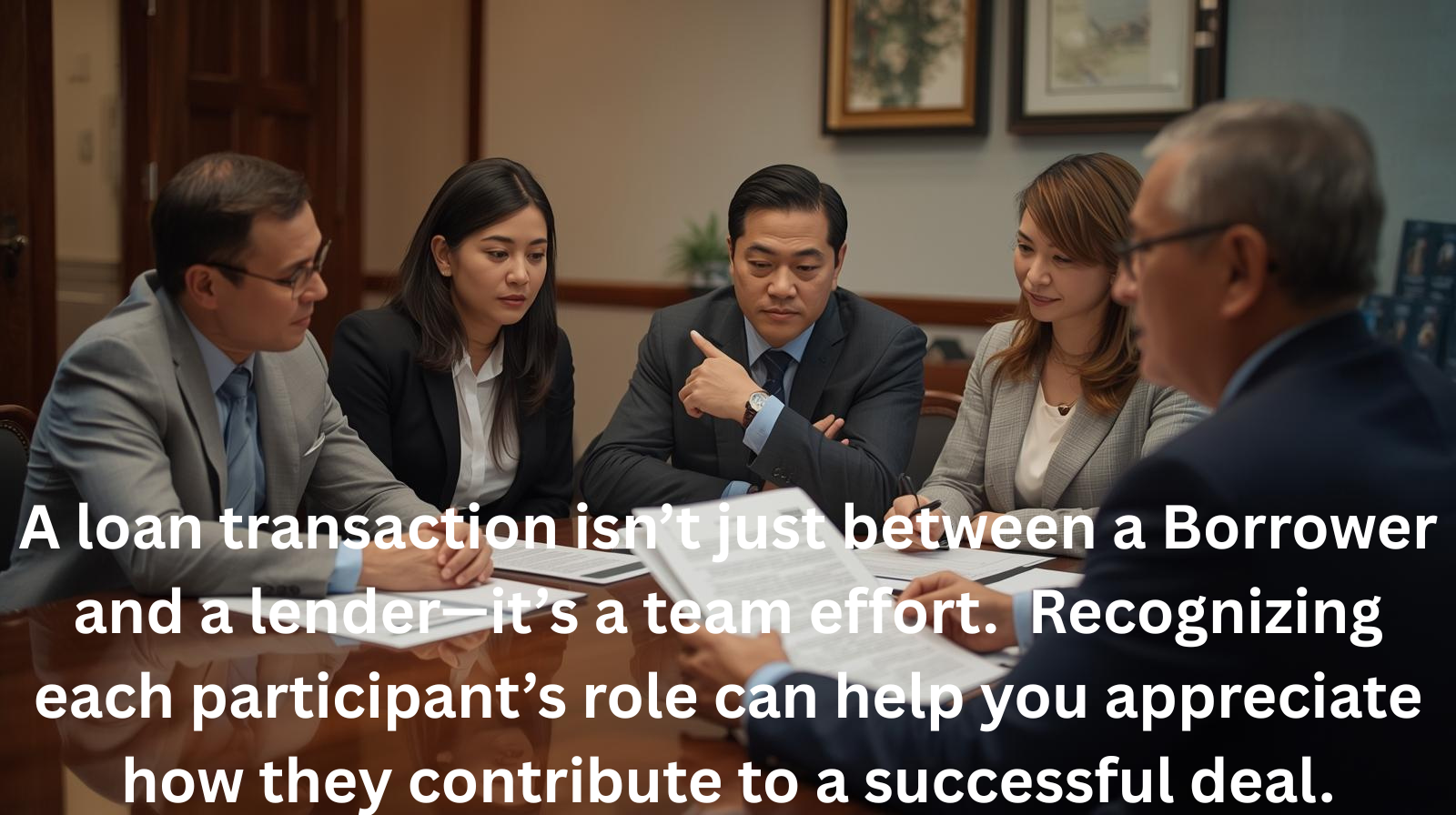
The Principal Parties
- Borrower (Buyer) and Seller: the primary participants. The Borrower seeks financing, the Seller transfers ownership, and the Lender provides the purchase-money loan as a key party.
- These parties are the catalyst that drives the transaction forward.
Example:
A buyer purchasing a $1.2M commercial property needs a $750K loan. The Borrower and Seller agree on the terms, and the Lender provides financing.
Takeaway: “Borrowers and lenders aren’t just names on paper—they’re the engine behind every deal.”
The Fiduciaries
- Real Estate Agents and Mortgage Brokers: These professionals act as fiduciaries representing buyers, sellers, or borrowers. They guide the process, ensuring all parties feel supported and confident in their roles.
- Important distinction: Agents are not principal parties—they facilitate, advise, and execute.
Example:
A mortgage broker structures a deal for a Borrower with complex income streams, ensuring the Lender receives a clean, organized submission. The real estate agent negotiates repairs and timelines to keep the deal on track.
The Lender
- Role: Approves and funds the loan based on underwriting standards.
- Responsibility: Evaluate risk, verify property value, and confirm Borrower’s ability to repay.
Example:
A private lender reviews a Borrower’s request for a $500K second lien on a multifamily property. They require a title report, appraisal, and three months of bank statements before issuing a commitment.
The Loan Servicer
- Role: Manages payments and account administration after closing.
- Responsibility: Collect monthly payments, handle escrow, and manage payoff requests.
Example:
After closing, the servicer sets up an online portal for the Borrower to make payments and track the loan balance.
When the Loan Process Begins
Once the Borrower signs a Letter of Interest, the Lender starts processing and underwriting. Key points:
- A Letter of Interest is typically a memorandum of understanding, not a binding contract.
- It outlines proposed terms and conditions, subject to credit review and due diligence.
Example:
A Borrower signs a Letter of Interest for a $2M bridge loan. The Lender begins ordering an appraisal and a Phase 1 environmental report before issuing a formal commitment.
Takeaway: “A Letter of Interest opens the door—but underwriting decides who walks through.”
Recap
- Principals: Borrower, Seller, Lender
- Fiduciaries: Agents and Brokers
- Support Roles: Loan Servicer
- Letter of Interest: Non-binding, signals start of underwriting