Capital is patient—until it isn’t.
Every cycle produces its own illusions: mispriced risk, temporary downturns that never reverse, and “one last leg up” narratives that refuse to die. In finance, these illusions have a name. They are wild goose chases.
A wild goose chase is commonly defined as a fruitless pursuit—an energetic search for something unattainable, nonexistent, or fundamentally misjudged. In financial markets, however, the phrase takes ona sharper meaning. It describes the disciplined‑looking, spreadsheet‑justified pursuit of returns that were never realistically available at the assumed level of risk.
“The four most dangerous words in investing are: ‘This time it’s different.’”
— Sir John Templeton
Few expressions better capture the persistence of speculative error.
From Horse Racing to Capital Misallocation
The term “wild goose chase” originated in 16th‑century England, describing a horse race in which riders followed a lead horse over an erratic, unpredictable course. The formation resembled wild geese in flight—energetic, fast, and visually impressive, but lacking a fixed destination.
That image maps uncomfortably well onto modern capital markets.
Shakespeare, Speculation, and Futility
William Shakespeare used the phrase metaphorically in Romeo and Juliet to describe a clever but ultimately pointless exchange of wit. By the mid‑18th century, Samuel Johnson’s Dictionary of the English Language defined it as “the pursuit of something as unlikely to be caught as a wild goose.”
Finance has since perfected the concept.
Speculative manias rarely look foolish at the beginning. They look sophisticated, data‑driven, and—crucially—shared.
The Modern Financial Wild Goose Chase
In today’s markets, wild goose chases do not announce themselves as reckless. They arrive dressed as prudence.
Common examples include:
- Waiting for interest rates to return to a previous decade’s norm
- Assuming asset prices will “mean‑revert” without structural change
- Chasing yield in increasingly complex credit instruments
- Projecting rent growth, exit cap rates, or equity multiples from peak-cycle data
Each assumption may be defensible in isolation. Together, they form a narrative that justifies overpaying for risk.
A wild goose chase in finance is rarely about ignorance. It is about selective belief.
Why Rational Investors Stay in Irrational Trades
Behavioral finance offers no shortage of explanations, but three forces dominate professional decision‑making.
1. Sunk Cost Bias
Once capital, reputation, and time are committed, exiting becomes psychologically expensive—even when probabilities deteriorate.
2. Narrative Anchoring
Markets move on stories long after fundamentals change. Investors anchored to the original thesis often mistake volatility for opportunity.
3. Institutional Momentum
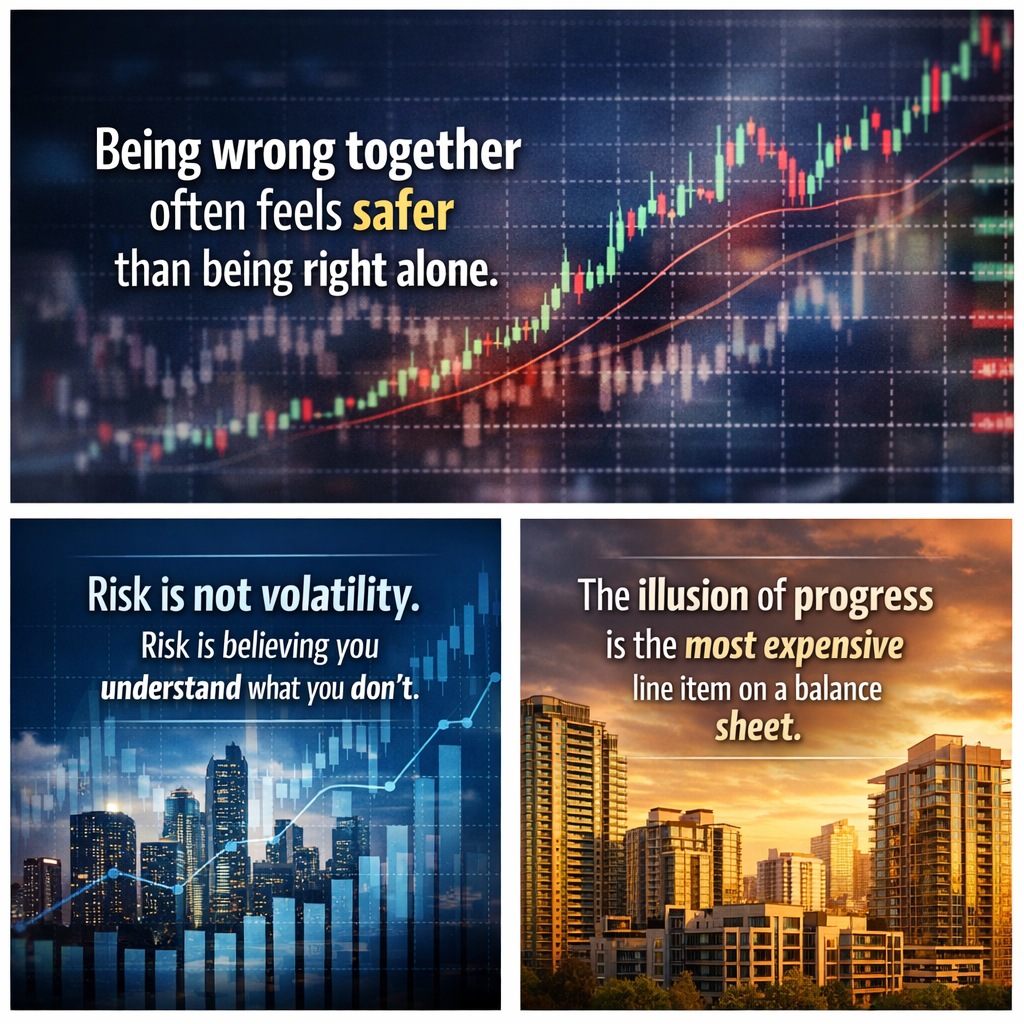
Career risk frequently outweighs capital risk. Being wrong together feels safer than being right alone.
“It’s better for reputation to fail conventionally than to succeed unconventionally.”
— John Maynard Keynes
In this environment, wild goose chases are not outliers. hey are systemic.
Synonyms That Map Directly to Market Behavior
The language surrounding futile effort is revealing—especially when applied to capital.
Fool’s Errand
Seen in projects that rely on optimistic refinancing assumptions in tightening credit conditions.
Red Herring
Common in markets distracted by short‑term data releases, es while ignoring long‑term balance‑sheet deterioration.
Snipe Hunt
Often embedded in complex financial products, sold more for fee extraction than for investor outcomes.
Vain Inquiry
Excessive modeling of variables that do not materially affect risk‑adjusted returns.
Each represents a different way in which Capisgetsmmisdirects without appearing careless.
Real Estate, Credit, and the Illusion of “Temporary”
Few sectors demonstrate wild goose chases more clearly than real estate and structured credit.
Common refrains include:
- “Rates will come down before the loan resets.”
- “Insurance costs are a short‑term anomaly.”
- “Exit cap rates will normalize.”
- “Tenants will absorb higher costs.”
Sometimes they do. Often, they don’t.
What turns analysis into a wild goose chase is not uncertainty—but the refusal to price it correctly.
When Chasing the Uncertain Is Rational
Not every uncertain investment is foolish. Even venture capital, early‑stage development, and distressed acquisitions all involve chasing outcomes that are far from guaranteed.
The distinction lies in asymmetry and awareness.
A productive pursuit:
- Prices downside explicitly
- Caps exposure
- Generates learning or optionality
A wild goose chase:
- Assumes favorable resolution
- Socializes downside
- Treats hope as a strategy
Risk isvolatility. Risk is believing you understand what you don’t.
The Professional Cost of Staying Too Long
In finance, opportunity cost is invisible—but devastating.
Capital tied up in unproductive pursuits cannot redeploy. Time spent defending a broken thesis crowds out better ones. Most dangerously, credibility erodes when rationalizations replace reassessment.
The most disciplined investors are not those who never chase uncertainty—but those who know when the chase has turned illusory.
The Enduring Lesson for Capital Allocators
The wild goose chase remains one of the most durable metaphors in the language because it captures a universal error: mistaking motion for progress.
In an era of rapid data, complex instruments, and constant narrative pressure, the challenge is not finding opportunities—it is knowing which ones were never real to begin with