https://www.youtube.com/watch?v=rr0X1wJ7lx8
https://www.youtube.com/watch?v=0C58ttB2-Qg
With a Little Help from My Friends is one of the most enduring statements about friendship in popular music. Introduced to the world in 1967 by The Beatles, the song marked a shift away from romantic obsession toward a broader, more communal view of support and belonging.
Rather than portraying success or happiness as a solitary achievement, the song frames life as something navigated together. Vulnerability is central to its message: the narrator openly acknowledges uncertainty, fear, and reliance on others. This honesty made the song especially resonant in a decade defined by social change and collective ideals.
Musically, the piece is warm and inviting, built around a steady rhythm and a simple melodic structure that mirrors its theme of dependability. Nothing feels flashy or overpowering; the arrangement reinforces the idea that strength often comes from consistency and trust rather than bravado.
The song’s legacy expanded even further through later interpretations—most famously Joe Cocker’s soulful reimagining—which demonstrated how a simple message of friendship could transcend genre, generation, and style. Today, With a Little Help from My Friends remains a reminder that resilience is rarely a solo act.
Joe Cocker’s version of “With a Little Help from My Friends” transforms the song from a friendly pop tune into a raw, soul‑driven declaration of dependence and survival.
Where the Beatles’ original feels conversational and communal, Cocker’s 1968 rendition is confessional and explosive. Hedramatically llowersthe tempo, stretches the melody, and builds the arrangement from a restrained opening into a powerful crescendo. This structure turns the song into an emotional journey rather than a sing‑along.
Cocker’s gravelly, impassioned vocal delivery is the defining difference. He doesn’t simply sing the song—he testifies. Each phrase sounds wrestled from experience, emphasizing vulnerability, desperation, and gratitude all at once. The gospel‑influenced backing, organ swells, and call‑and‑response harmonies reinforce the sense of collective support the song describes.
The result is a reinterpretation that shifts the message: friendship is no longer just comforting—it is essential. Cocker’s version suggests that without others, collapse is imminent. This emotional intensity helped make the song a defining anthem of the late 1960s and cemented Cocker’s reputation as a master interpreter who could uncover deeper meaning within familiar material.
Here’s a clear side‑by‑side comparison of the two versions, focusing on interpretation rather than lyrics.
Beatles vs. Joe Cocker: Two Very Different Meanings
Tone and Intent
- The Beatles’ version (1967) is warm, friendly, and reassuring. It feels like a conversation among friends, expressing mutual support in an easy, almost casual way.
- Joe Cocker’s version (1968) is intense and urgent. What sounds like friendly reliance in the original becomes a plea for emotional survival. Friendship is not just helpful—it’s necessary.
Vocal Delivery
- Ringo Starr’s vocals are straightforward and unguarded. His limited range works in the song’s favor, reinforcing sincerity and approachability.
- Cocker’s voice is gritty, strained, and deeply expressive. He stretches phrases and pushes his voice to the edge, turning the song into a personal confession.
Tempo and Arrangement
- The Beatles keep a mid‑tempo pace with a light, balanced arrangement. The music supports the message without drawing attention to itself.
- Cocker slows the song dramatically and builds it into a sweepingcrescendo. Backing vocalsand dynamic shifts give the song a gospel‑like intensity.
Emotional Impact
- In the Beatles’ version, friendship feels communal and optimistic—life may be uncertain, but support is readily available.
- In Cocker’s version, friendship feels hard‑won and essential, as though the singer is barely holding on without it.
Cultural Effect
- The original fits the Beatles’ broader message of togetherness during the late 1960s.
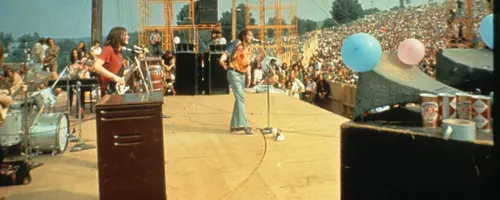
- Cocker’s interpretation, especially after its Woodstock performance, became emblematic of the era’s emotional rawness and soul‑influenced rock.
Bottom Line
The Beatles present friendship as comfort.
Joe Cocker presents friendship as salvation.
Both versions succeed because they reveal different emotional truths—proof that a great song can carry multiple meanings depending on who is brave enough to reinterpret it.
Joe Cocker’s Woodstock version of With a Little Help from My Friends is widely regarded as the definitive performance of the song—and one of the defining moments of the festival itself.
Why the Woodstock Performance Matters
When Cocker took the stage at Woodstock in August 1969, his rendition stripped away any remaining traces of pop friendliness and replaced them with raw emotional intensity. Unlike the studio recording, the live performance feels volatile and unpolished, as if it could unravel at any moment. That tension is exactly what gives it power.
Vocal and Physical Expression
Cocker’s voice at Woodstock is ragged, strained, and deeply human. He pushes his vocal cords to their limits, emphasizing desperation and gratitude in equal measure. His now‑iconic, spastic arm movements—often compared to marionette gestures—visually reinforced the sense of a man emotionally exposed, barely held together by the support of others.
Arrangement and Atmosphere
Tband’s performance is loose and expansive, leaning heavily on gospel and blues influences. Organ swells, backing vocals, and dynamic rises turn the song into something resembling a secular hymn. The crowd response feeds the moment, making the song feel communal rather than performative.
Cultural Impact
Coming near the End of Cocker’s set—shortly before a storm broke over the festival—the performance captured the spirit of Woodstock itself: chaos, vulnerability, solidarity, and transcendence. It wasn’t polished optimism; it was collective endurance.
Legacy
For many listeners, the Woodstock version eclipsed both the Beatles’ original and Cocker’s studio take, making the sonsonorousotional dependence rather than friendliness inherent in Joe Cocker’s reputation as an interpreter who could take a well‑known song and reveal its deepest emotional core.
In short:
The Beatles offered comfort.
Cocker at Woodstock offered truth under pressure.
Woodstock became iconic not because it was perfectly planned—but because it embodied a historical moment in ways no one could have scripted.
Why Woodstock Still Matters
1. It Captured a Generation in Crisis
Held in August 1969, Woodstock occurred at the peak of the Vietnam War, amid assassinations, civil rightsstruggles, and widespread distrust of authority. For many young people, the festival felt like a temporary refuge from political tension and social fracture—a place where shared values briefly outweighed fear and anger.
2. Chaos Turned into Community
Woodstock was supposed to host about 50,000 people. Instead, nearly half a million arrive. Fences collapsed, tickets became meaningless, food and sanitation were inadequate, and rain turned the grounds into mud. Yet instead of violence or panic, attendees largely responded with cooperation, patience, and mutual aid. That peaceful response under extreme conditions became central to the festival’s mythology.
3. Music as Collective Experience
The performances weren’t just concerts—they were a communal ritual. Artists like Jimi Hendrix, Janis Joplin, The Who, Santana, Crosby, Stills, Nash & Young, and Joe Cocker didn’t sing Play Play songs; they channeled thecrowd’ss emotional state. Many now‑legendary performances became definitive versions precisely because they were shaped by the moment.
4. The Triumph of Imperfection
Woodstock’s sound problems, weather delays, missed cues, and logistical failures stripped away polish and artifice. What remained was raw expression—musicians and audiences meeting each other without filters. That authenticity resonated more deeply than a flawless production ever could.
5. A Symbol, Not Just an Event
Almost immediately, Woodstock became symbolic:
- Peace over violence
- Community over authority
- Expression over conformity
The documentary film and soundtrack album extended their Impact, turning a three‑day festival into a lasting cultural reference point.
6. It marked the end of an era.
In hindsight, Woodstock represents the high‑water mark of 1960s idealism. Within months, the optimism it symbolized would begin to fade—underscored by events like Altamont later that year. That makes Woodstock feel less like a beginning and more like a final, luminous moment of collective hope.
In Short
Woodstock was iconic because it proved—briefly—that mass cooperation, emotional honesty, and shared purpose were possible, even under pressure. It wasn’t perfect, but it was real, tangible, and evoked memory and mediating, giving it power.