Literal Meaning
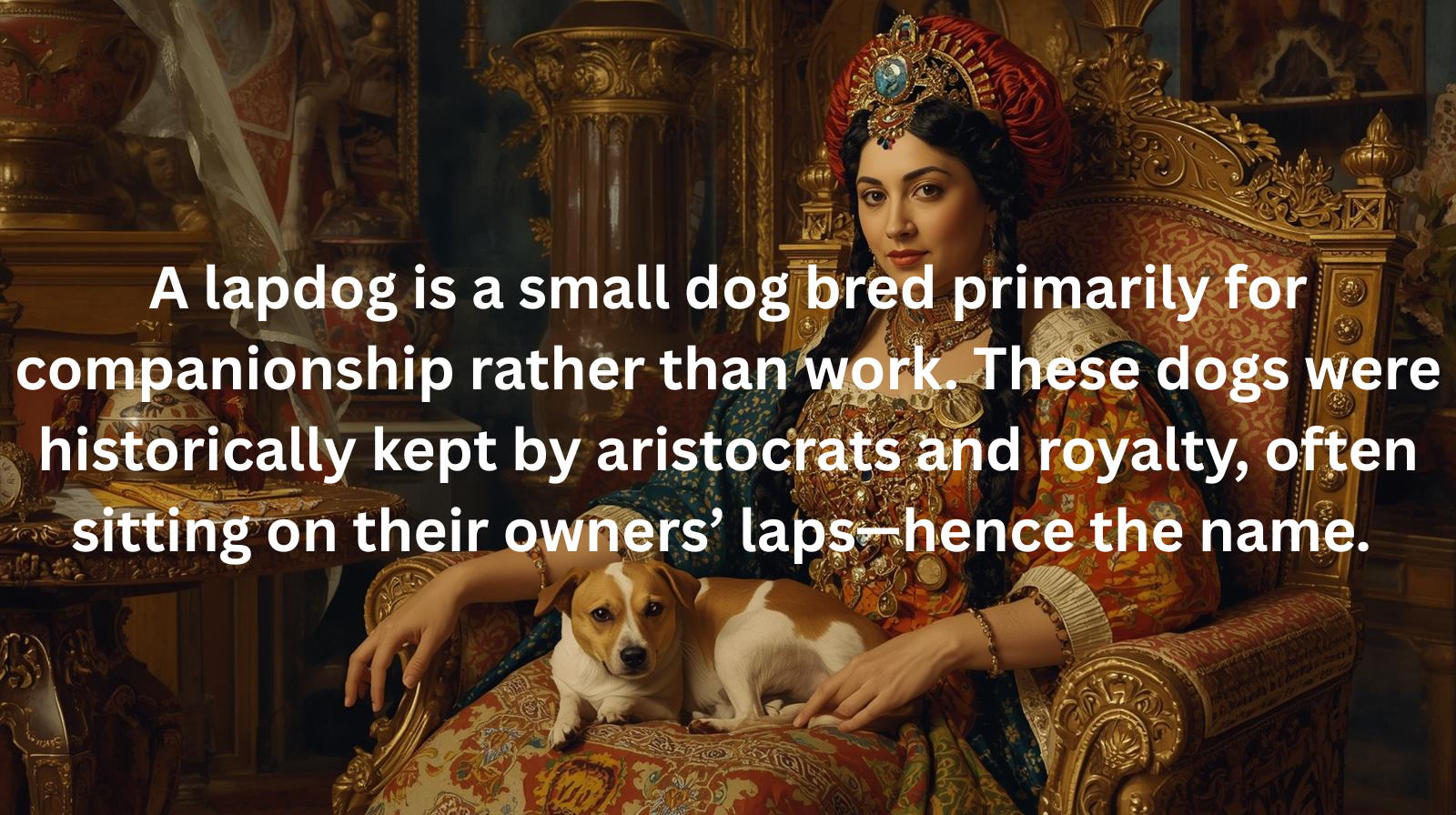
A lapdog is a small dog bred primarily for companionship rather than work. These dogs were historically kept by aristocrats and royalty, often sitting on their owners’ laps—hence the name. Breeds like Pekingese, Maltese, and Cavalier King Charles Spaniel were classic lapdogs.
Historical Origin
- Early Use: The term dates to the 16th century in English, referring to small dogs kept indoors for comfort and status.
- In Europe, lapdogs became symbols of wealth and leisure because only the affluent could afford pets that served no practical purpose, making the term a reflection of social status and luxury.
- Cultural Role: Lapdogs were often featured in portraits of nobility, emphasizing refinement and luxury.
Figurative Meaning
Over time, “lapdog” evolved into a metaphor for subservience:
-
Modern Usage: A person or entity that is excessively obedient, submissive, or dependent on someone in power.
-
Example: “The committee acted like a lapdog to corporate interests” implies unquestioning loyalty and lack of independence.
The term “lapdog” lost its original meaning through a process of semantic shift, which often happens when cultural and social contexts change:
Original Meaning
- In the 16th–18th centuries, a lapdog was literally a small dog kept for companionship, often by aristocrats.
- It symbolized status, leisure, and refinement because only wealthy households could afford non-working pets.
Why It Changed
- Decline of Aristocratic Exclusivity
As pet ownership became more widespread across all social classes in the 19th and 20th centuries, lapdogs ceased to be exclusive symbols of wealth and leisure. This democratization of pet ownership led to a decline in the term “lapdog’s” original prestige, shifting its cultural significance from a status symbol to a more negative connotation of submissiveness. - Rise of Figurative Use
Writers and speakers began using the “lapdog” metaphor to describe people who are overly submissive or dependent, drawing on the image of a small dog sitting obediently on its owner’s lap. - Cultural Perception Shift
The literal meaning persisted in pet contexts, but the figurative sense—implying weakness, servility, or lack of independence—became dominant in politics, business, and media.
Modern Usage
Today, “lapdog” is rarely used to describe actual pets in formal writing. Instead, it’s a pejorative term for individuals or organizations that act as unquestioning followers, such as “a lapdog press” or “a political lapdog,” highlighting its continued relevance in contemporary political and media discourse.
Use of the term, borrowed from my article on Bureaucratic Drag:
https://danharkey.com/post/bureaucratic-drag-on-productivity
“Bureaucratic policies and procedures shift focus from the ‘vital few’ to the ‘trivial many, ‘emphasizing processes over results, which hampers productivity and profits. Bureaucratic policies and procedures that hinder productivity can occur in both small entrepreneurial enterprises and large Corporation. Consider a small company in which the owner is ego-driven and attempts to micromanage all aspects of the organization, leaving employees as yes-men, yes-women, and lapdogs.”
Language evolves through a combination of social, cultural, and functional forces.